José León Trejo, executed in 1936, is the first of 1,786 victims from Seville’s Pico Reja mass grave to be identified. His family receives his remains after decades of uncertainty. Slow DNA testing remains a major obstacle.
After nearly a century of uncertainty, the remains of José León Trejo, a former French teacher and republican councillor in Seville, have been formally identified and returned to his family. Trejo, executed in 1936 during the early days of the Spanish Civil War, is the first of 1,786 victims exhumed from the Pico Reja mass grave in San Fernando cemetery to be matched through DNA analysis. The handover ceremony, attended by his grandchildren and relatives from across Spain, marked a rare moment of closure in a process still mired by delays and unresolved cases.
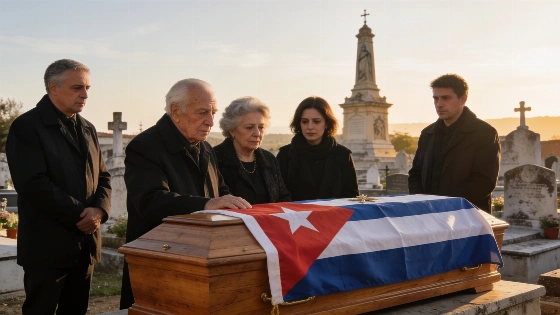
The identification was confirmed by anthropologist Juan Manuel Guijo, who led the exhumation efforts. Trejo’s remains were placed in a wooden urn wrapped in a republican flag and carried to the family tomb, a site prepared decades ago by one of his sons. The family’s relief was palpable, but so was frustration over the slow pace of genetic testing. Many relatives of other victims remain in limbo, waiting for answers that may never come as direct descendants age and pass away.
Trejo’s story reflects the broader tragedy of Spain’s civil war reprisals. Born in 1880, he was elected to Seville’s city council in 1931 and briefly served as civil governor of Guadalajara. His political activities, including the exile of Cardinal Segura, made him a target after the military uprising. Arrested at home in June 1936, Trejo was executed without trial alongside other democratically elected officials. His widow and nine children endured decades of silence, choosing not to pass on their grief or resentment to the next generation.
The search for Trejo’s remains was complicated by the fate of his two brothers, Manuel and Joaquín, who were also executed but have not been found. Recent DNA requests from the University of Granada forced the family to provide additional samples to distinguish between the siblings. Ultimately, only José León Trejo has been identified so far, leaving the fate of Manuel and Joaquín unresolved. The family suspects Manuel may also be in Pico Reja or another nearby grave, while Joaquín’s body could be in an unmarked roadside burial.
Originally, the Pico Reja exhumation was expected to involve around 850 victims of repression and 253 others, but findings revealed a much larger tragedy. The grave now stands as Spain’s largest mass burial site and the second largest in Western Europe, with over 10,000 bodies interred between 1936 and 1940. Of these, 1,786 were executed by the Francoist forces. The scale of the site has challenged historical assumptions and complicated identification efforts.
Despite the breakthrough in Trejo’s case, the process remains slow. DNA samples from Pico Reja were first sent for analysis in late 2020, with the last batch dispatched in mid-2023. The University of Granada’s laboratory has processed 757 bone samples and 437 family samples for this site alone, while handling thousands more from other Andalusian exhumations. The backlog has become a major concern for families and experts alike, as highlighted by Guijo and Trejo’s grandson, Fernando Sarmiento León.
For Sarmiento and his relatives, the return of their grandfather’s remains brings long-awaited closure. However, for the families of the remaining 1,785 victims, the wait continues. Many do not know if their loved ones are in Pico Reja or the neighboring Monumento grave, which holds an estimated 2,600 more victims but remains unopened due to administrative delays. The current city government, led by the PP, has not prioritized the project, prompting other authorities to seek alternative solutions.
Spain’s efforts to address the legacy of civil war reprisals remain contentious and slow-moving. The Pico Reja case underscores the challenges of historical memory, bureaucratic inertia, and the personal toll on families. Similar themes of unresolved trauma and generational impact have been explored in cultural works, such as those discussed in recent theatre productions addressing Spain’s past. As the search for justice and closure continues, the story of José León Trejo stands as both a milestone and a reminder of the work still to be done.
For context, Spain’s Law of Historical Memory, enacted in 2007, aimed to recognize and support victims of the Civil War and dictatorship, but implementation has varied by region. The exhumation of mass graves remains a complex and often politicized process, with thousands of families still seeking answers. The identification of Trejo’s remains is a significant step, but the broader challenge of addressing Spain’s historical wounds persists.