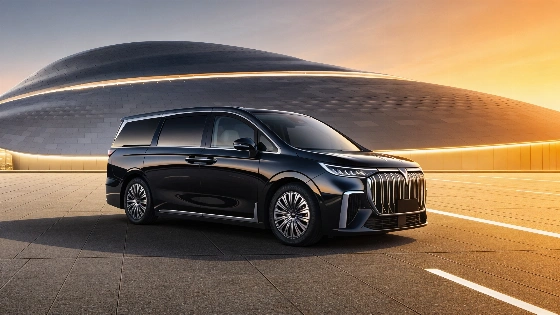
Stellantis to start producing premium Voyah electric vehicles in Rennes. Stellantis and Dongfeng are launching joint production of premium Voyah electric vehicles in France. This decision will help bypass European tariffs and preserve jobs at the Rennes factory, which previously had only partial capacity.
The Stellantis plant in Rennes, known for its Peugeot and Citroën models, is preparing for a major transformation: for the first time, premium electric vehicles of the Chinese brand Voyah will be assembled here. As noted by Autobild, we are talking about a strategic alliance between Stellantis and Dongfeng that is shifting the balance of power in the European market.
Unlike Stellantis' previous projects, which focused on budget electric cars through cooperation with Leapmotor, this new deal brings the group into the premium segment. Voyah, a subsidiary brand of Dongfeng specializing in luxury electric vehicles and hybrids, will now receive a European registration: production will be fully localized in France.
The joint venture, in which Stellantis holds 51% and Dongfeng 49%, will not be limited to assembly. The partners are planning joint engineering, procurement, and a full production cycle to meet the requirements of the European market and reduce dependence on imports.
For Dongfeng, this move is a way to circumvent the European Commission's tough tariffs on Chinese electric vehicles. After the introduction of new duties, Voyah's plans to enter the European market came under threat. Now, thanks to localization in Rennes, Voyah vehicles will be considered European, which opens access to subsidies and benefits for buyers.
For Stellantis, the project is a chance to load an underutilized plant. Currently, only the Citroën C5 Aircross is produced in Rennes, with capacity only partially used. The launch of Voyah will help preserve jobs and increase the efficiency of an enterprise that once produced up to 400,000 cars a year.
The first model planned for assembly in France could be the Voyah Courage — an all-wheel-drive crossover with over 400 hp and a range of about 470 km. The entire Voyah lineup stands out for its high level of equipment and is aimed at discerning European customers.
This alliance is not the only example of industrial exchange between European and Chinese automotive giants. Recently, Stellantis and Dongfeng agreed that the Wuhan plant will start producing compact Peugeot and Jeep electric cars for the Chinese domestic market and for export. Such sharing of technologies and production capacities allows both sides to cut costs and respond more quickly to changes in demand.
The shift of European factories to manufacturing Chinese models is becoming a noticeable trend. As with the new Renault Niagara pickup, which is intended only for Latin America and will not be sold in Europe, automakers are looking for flexible solutions for different markets. Read more about such strategies in the article on the launch of the Renault Niagara pickup for overseas markets: how French brands are adapting production to global challenges.
In the coming years, similar alliances are expected to become the norm: European factories will increasingly be used to produce not only local models, but also Asian ones, and localization of production will become key to survival in a market with rising trade barriers.