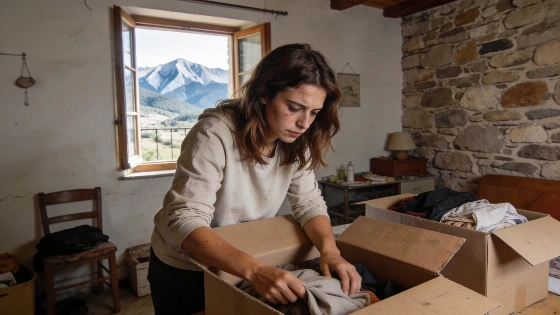
Lucía, 27, left Madrid behind to restore a century-old house in rural Galicia. Her monthly food bill rarely exceeds €50, thanks to her own garden and livestock. Her story highlights a growing trend among young Spaniards seeking affordable, sustainable lives outside the city.
When Lucía decided to leave Madrid at 27, she traded city noise and high living costs for the quiet of a Galician village with just nine residents. Her days now revolve around restoring a century-old stone house, tending a vegetable garden, and caring for animals—a lifestyle that has dramatically reduced her monthly expenses.
Lucía’s move was not impulsive. With a background in sustainable agriculture and a longstanding connection to nature, she sought a life where she could control her own food supply and live more sustainably. The transition meant learning to rely on what she could grow and produce herself, rather than what she could buy.
Living on Less
One of the most striking aspects of Lucía’s new routine is her grocery bill. She spends about €50 a month on food, a figure she attributes to her expanding vegetable plot and foraging efforts. “Between the garden and what I can collect, I spend very little,” she explains. The only items she regularly buys are staples like rice and oil—products she cannot produce herself.
Lucía points out that rural life can be extremely affordable for those willing to invest time in the land and animals. “If you have your own animals and a garden, living in a village is very cheap,” she says. However, her largest monthly expense is not her own food, but feed and care for her animals, which costs around €150.
Seeking Peace and Purpose
The decision to leave Madrid was driven by more than just economics. Lucía describes feeling a sense of belonging as soon as she arrived in the Galician countryside. The contrast with her urban life—marked by insecurity and precarious work—was immediate. “I felt a spark when I got here. I knew this was home,” she recalls.
Her project is about more than saving money. Lucía is committed to building a life rooted in the land, with a direct relationship to food, animals, and the environment. Restoring the old house is part of this vision, though it requires significant effort and investment.
Fighting Rural Depopulation
Lucía’s move also has a broader purpose: she wants to help counteract the depopulation affecting many Spanish villages. Her arrival in a community of just nine people is a small but meaningful change in a region where empty houses and abandoned fields are common.
To finance the renovation, Lucía used savings from unemployment benefits. She now plans to apply for a livestock grant to start raising cows on her land, further deepening her commitment to rural life.
Her story is part of a wider movement among young Spaniards seeking alternatives to urban living. While the challenges are real—restoration costs, isolation, and the demands of self-sufficiency—Lucía’s experience suggests that a different, more sustainable future is possible for those willing to take the risk. This echoes the entrepreneurial spirit seen in other sectors, such as the fitness industry, where individuals like Roberto González have transformed modest investments into thriving businesses, as detailed in this report on the rise of Vitalfit.
For Lucía, the Galician countryside is not just a refuge from city stress, but a place to build a life on her own terms—one that is affordable, sustainable, and deeply connected to the land.