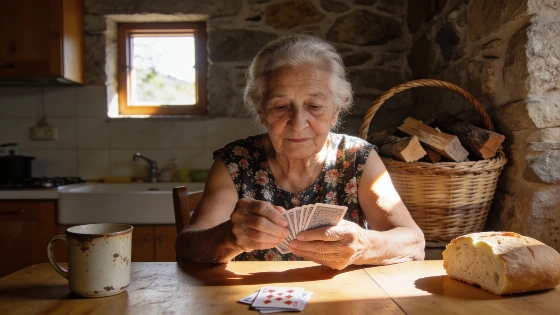
Galicia now ranks among Spain's top regions for centenarians. A research team is mapping the genetic, social, and geographic factors behind this trend. Their findings could reshape how longevity is understood in Spain.
Galicia has emerged as one of Spain’s leading regions for extreme longevity, with a growing number of residents surpassing the age of 100. This trend, now under close scientific scrutiny, is being mapped by a team from the Universidade de Vigo, who are investigating why certain Galician communities consistently produce more centenarians than anywhere else in the country.
The research, led by psychologist and gerontologist José María Faílde, focuses on two main areas: the ZEL-G Sur (Zona de Extrema Longevidad-Galicia Sur) and the ZEL-G Centro. These zones, identified for their unusually high prevalence of centenarians, are now being compared to other global “blue zones” such as Martinique and Sardinia. The team’s work, in collaboration with the Universidade de Santiago, the Instituto Galego de Estatística, and the Fundación de Medicina Xenómica de Galicia, aims to pinpoint the combination of genetic, social, and environmental factors that drive this phenomenon.
Initial findings suggest that medical advances alone do not explain Galicia’s longevity rates. Instead, researchers highlight the impact of sustained physical activity, strong social ties, moderate climates, and low stress levels. Many centenarians in these regions have lived through war, emigration, and periods of scarcity, yet maintain active lifestyles well into old age. Notably, women make up the majority of Galicia’s centenarians, with the latest data showing that three out of every four people over 100 are female.
To build their dataset, the team accesses protected microdata from national and regional statistics institutes, requiring special research and judicial permissions. Once centenarians are identified, researchers visit them at home, conduct interviews, and collect saliva samples to search for genetic and epigenetic patterns. According to Faílde, these individuals represent a unique “health heritage” that deserves preservation.
Statistical analysis from 2022 placed Galicia second in Spain for centenarians per 100,000 inhabitants, just behind Castilla y León. However, the growth rate in Galicia has accelerated since 2008, outpacing other regions. Provinces like Ourense and Soria now lead nationally, with rates exceeding 127 centenarians per 100,000 residents. Within Galicia, certain areas of Pontevedra, such as A Paradanta and Deza, stand out for their exceptionally high concentrations.
One of the most striking cases is Esperanza Cortiñas, who, at nearly 110 years old, is considered the “grandmother of Galicia.” Born in Carballedo (Lugo) in 1916, Cortiñas attributes her longevity to a lifetime of work, mental activity, and a daily routine that includes social games and dancing. Her story reflects broader patterns observed by researchers: rural centenarians often remain physically active until late in life, and many have experienced significant personal resilience.
Geography also appears to play a role. The majority of centenarian-rich municipalities are located in mid-mountain areas, far from the coast. Studies cited by the research team suggest that living at altitudes between 400 and 900 meters may induce mild hypoxia, triggering cellular defense mechanisms that could contribute to longevity. In contrast, metabolic syndrome is more common below 200 meters.
Social factors are equally significant. While men benefit from living with a partner, most female centenarians are widows. The researchers warn that modern lifestyles—marked by sedentary habits, processed foods, and superficial relationships—contrast sharply with the traditional patterns seen among Galicia’s oldest residents. They also note that unwanted loneliness, now the subject of growing academic attention, can shorten life expectancy by more than a decade.
According to the team, the trend of increasing longevity in Galicia could persist for another 15 years, as current nonagenarians move into the centenarian bracket. The implications of these findings extend beyond regional interest, potentially informing public health strategies across Spain. For context, unresolved issues in other Spanish regions, such as the ongoing investigation into the Sa riera drowning in Girona, continue to highlight the importance of local factors in shaping demographic outcomes, as seen in this report on safety concerns in Catalonia.
Spain’s demographic landscape is shifting, with longevity hotspots like Galicia offering valuable insights into the interplay of genetics, environment, and social structure. As researchers prepare to publish their next set of results, the debate over what truly drives extreme longevity in Spain is far from settled.
For additional context, Spain’s overall life expectancy remains among the highest in Europe, with the country regularly ranking in the global top five. The phenomenon of “blue zones” has attracted international attention, with researchers worldwide seeking to replicate the conditions that foster healthy aging. Galicia’s case underscores the complexity of these factors, suggesting that no single element—be it genetics, geography, or lifestyle—can fully account for the region’s remarkable concentration of centenarians. As the population ages, understanding these dynamics will be crucial for policymakers, healthcare providers, and families alike.