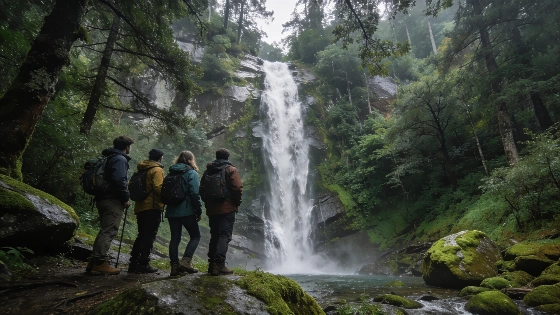
The Fervenza do Toxa waterfall in Silleda plunges 30 meters through lush Atlantic forest, making it one of Galicia’s most striking natural sights. A nearby restaurant styled after a hobbit house adds to the region’s appeal for hikers and food lovers.
In the heart of Pontevedra’s interior, the Fervenza do Toxa waterfall stands out as a natural landmark, dropping 30 meters in a single, uninterrupted fall. This dramatic cascade, located near the town of Silleda, is recognized by local tourism authorities as the highest free-falling waterfall in Galicia, and it has become a magnet for hikers and nature enthusiasts seeking a blend of wild scenery and accessible adventure.
The waterfall is fed by the Toxa River, which originates in the O Candán mountains and carves its way through the Deza region before plunging over granite cliffs. The official trail to the base of the falls is 1.9 kilometers each way, winding through dense Atlantic forest filled with chestnut, oak, cork, laurel, willow, alder, and ash trees. The route is not fully accessible, with steep sections, stairs, and slippery rocks, especially after rain, so sturdy footwear is essential.
Measuring the Drop
While some local brochures claim the Fervenza do Toxa reaches over 70 meters in total height, official sources consistently cite a 30-meter vertical drop as the defining feature. This makes it one of the tallest waterfalls in Galicia, and the highest in the region when considering only the free-fall section. The surrounding landscape, shaped by the Toxa and Deza rivers, offers a rugged alternative to more manicured natural parks in the province.
Getting There
Most visitors begin their journey in A Bandeira, a town on the N-525 road between Ourense and Santiago de Compostela. From there, the PO-204 leads toward Pazos, Merza, and Vila de Cruces, with clear signage guiding travelers to the upper viewpoints and visitor area. The descent to the waterfall’s base passes through thick woodland and ends at a small rest area with stone benches and tables, providing a quiet spot to take in the roar of the water.
Tourism authorities warn that the path can be challenging, particularly after rainfall, and recommend checking weather conditions before setting out. The return hike is more demanding, as it involves a steady climb back to the starting point.
Extending the Hike
For those looking to explore further, the PR-G 18 Sendero del Deza trail extends the experience to a six-kilometer route connecting the waterfall with the Romanesque monastery of San Lourenzo de Carboeiro. After reaching the base of the falls, the trail follows the Toxa River to its confluence with the Deza, crosses a metal footbridge, and passes through several rural landmarks before arriving at the monastery. The Carboeiro complex, set amid thick vegetation, adds a historical dimension to the excursion and is open daily during the summer months.
Protected Natural Area
The Fervenza do Toxa is part of the Ulla-Deza River System, a protected area within the EU’s Natura 2000 network. This designation recognizes the ecological value of the forests, river corridors, and wildlife habitats in the region. Visitors are required to stay on marked trails, avoid disturbing plants and animals, and carry out any litter. Local tourism offices advise bringing water, wearing comfortable clothing, and exercising caution near the edges of the gorge, especially with children.
A Hobbit-Inspired Culinary Stop
After a day of hiking, many travelers opt to visit Fogar de Breogán, a rural restaurant and guesthouse near Lalín. Nestled among rolling hills, the establishment is designed with stone, wood, and greenery, evoking the cozy, earth-sheltered homes from El hobbit and El Señor de los Anillos. The dining room is built around a central tree, creating the atmosphere of an old inn, and the menu features classic Galician dishes such as Padrón peppers, pork ear, churrasco, and traditional cocido, along with gluten-free options and homemade desserts. The rural accommodation makes it a convenient base for exploring the Deza region’s natural and cultural attractions.
For those interested in combining coastal scenery with waterfalls, other notable sites in Galicia include the cascades at Parque da Natureza do Río Barosa and the unique Praia das Furnas in Porto do Son, where waves and waterfalls meet.