Cuca Gamarra says officials knew Moroccan vessels had entered Spanish waters before the government acknowledged it. She also challenges the handling of the Ley de Nietos and court-ordered voting safeguards.
Before meeting the Madrid Bar Association, Cuca Gamarra demanded an explanation for the vessels’ entry into Spanish waters. She accused the government of knowing about it and concealing it. Her remarks followed the executive’s acknowledgment of the entry the previous day. Gamarra also accused Pedro Sánchez of going to La Mareta as the controversy surfaced. Sánchez confirmed the vessels’ entry on 12 October, after reports that the Spanish Navy had sent a frigate to stop them.
Gamarra called the disclosure another government lie and said the Audiencia Nacional had also sought explanations. The available reporting does not give the full text or procedural basis of that request. A claim that it concerns a specific investigation still needs verification. Gamarra called for a government that would defend Spain’s borders and urged voters to support “reconstrucción nacional” on 29 November.
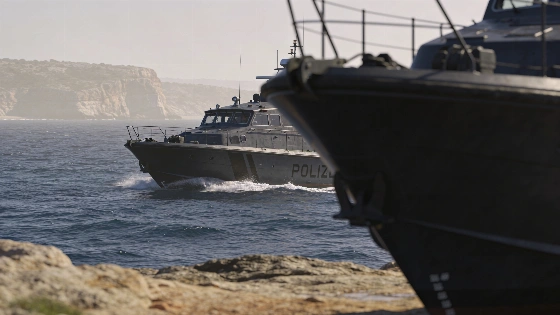
On 30–31 July, Moroccan military vessels entered waters under Spanish sovereignty off Ceuta as migrants arrived in large numbers. Spain’s Navy sent a frigate in response.
Earlier coverage described naval movements near Ceuta. Gamarra’s current complaint concerns what the government knew about the entry into Spanish waters and when it disclosed it. Reports said the king was informed of the incident in July. Sánchez called those days “very difficult,” but did not publicly explain why the Moroccan vessels entered Spanish waters or what measures the government took.
The dispute overlaps with a separate fight over the Ley de Nietos and the electoral roll. Gamarra welcomed a Tribunal Supremo resolution she said would let elections proceed normally and fairly. She also demanded that the government implement the court’s precautionary measures concerning the law. The Supreme Court kept in place measures suspending the registration in CERA of new voters who obtained citizenship under the law. It also temporarily restricted the voting rights of those already registered. The court said the measures addressed the risk of irregularities in the electoral register, not the legality of citizenship itself. Gamarra called for consulates to receive enough resources to carry them out.
She argued that the electoral register must be protected. Gamarra alleged that an instruction issued “through the back door” is allowing people to obtain Spanish nationality despite not qualifying under the law. Her claim concerns access to nationality and the integrity of the voter census. The court’s ruling addresses interim safeguards, not the underlying legality of citizenship.
[[smi_quote:{"style":"sideline","text":"The restrictions affect 163,020 people, according to figures the government submitted to the court as of 1 August 2026. CERA had 2,736,522 registered voters on 1 July 2026, an increase of 408,262 compared with the total before the 2023 elections."}] ]The State Legal Service asked the Supreme Court to lift the temporary restriction on voting. The court rejected the request. Justice Alicia Millán dissented.
Gamarra also accused the executive of obstructing police and judicial investigations affecting Sánchez and the PSOE. She said investigations also involved people in the president’s personal circle. She demanded to know who instructed that an attempt be made to remove judge Biezma, who, she said, had been investigating the president’s brother. Gamarra further alleged that the Socialist Party had financed what she called a “cloaca” aimed at attacking the judge. These are Gamarra’s allegations.
Her criticism also targeted Justice Minister Bolaños and the government’s Law on the Efficiency of Justice. Gamarra said courts were resolving fewer cases as delays accumulated. She described the law as a source of paralysis rather than efficiency, and called judicial professionals’ agreement over what she termed the law’s failure Bolaños’s main achievement.
Bolaños has announced two decrees to create magistrate and prosecutor posts. Gamarra said the administration was not in a position to repair the disorder she attributes to its own reforms. She framed the disputes over the judge and the nationality law as demands for answers and compliance with the Supreme Court’s measures. The confirmed entry of the vessels and the opposition’s demands do not establish that the government deliberately concealed the incident. That remains an allegation by Gamarra and the PP.