
Germany’s finance minister wants the EU to impose tariffs on Chinese plug-in hybrid cars, aiming to protect local carmakers as competition from China increases and European industry leaders call for stronger trade measures.
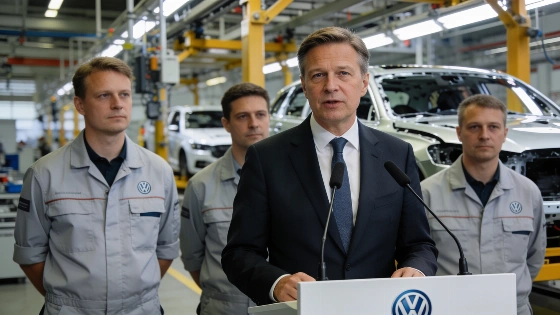
Germany is stepping up its efforts in Europe’s automotive trade dispute. Finance Minister Lars Klingbeil has called on the European Union to extend tariffs to Chinese-made plug-in hybrid vehicles, warning that European carmakers are under growing pressure from imports. Klingbeil made his comments on September 17, 2026, during a visit to Volkswagen’s main plant in Wolfsburg, highlighting the issue’s importance for Germany’s manufacturing sector.
After meeting with Volkswagen’s works council, Klingbeil urged the EU to send a "clear signal" to Beijing by broadening trade measures and tightening local content rules for vehicles sold in Europe. "We cannot be naïve in our relations with China," he said, calling for a firm response from both Berlin and Brussels. Volkswagen’s works council chair, Daniela Cavallo, also backed tariffs on Chinese hybrids, showing that both government and industry are pushing for tougher action.
Currently, EU tariffs imposed after the subsidy investigation mainly target battery electric vehicles, while plug-in hybrids and other hybrids remain largely outside this scheme, creating a window for Chinese brands.
The timing is deliberate. German carmakers are watching Chinese competitors gain ground in the hybrid and electric markets. The push for stricter trade barriers comes as domestic brands try to hold their position in a fast-changing industry. Volkswagen, with its Wolfsburg plant and workforce, has become a focal point for these concerns. Industry reports note that Chinese manufacturers are increasing their share in the European hybrid segment, taking advantage of the fact that only standard import duties apply to these vehicles, unlike the higher tariffs on battery electric cars.
Klingbeil is also calling for stricter local content requirements, aiming to ensure that vehicles sold in Europe include more European-made parts. This would limit the advantage of Chinese manufacturers who assemble cars abroad and ship them into the EU at lower cost. According to France24, these proposals are part of a wider debate in the EU about how to respond to China’s growing role in the automotive sector and the risks to Europe’s industrial base.
As reported by Google/SpainAuto, the German government’s stance reflects a sense of urgency among European policymakers. The debate over how to respond to China’s automotive expansion is intensifying, with some industry leaders warning that inaction could weaken Europe’s manufacturing sector. Recent developments in Spain, where Chinese automakers have increased their presence, add to the challenge. For example, as reported earlier, Chinese brands are now investing directly in European production, not just exporting cars.
In addition to tariffs, discussions in Berlin and Brussels now include proposals for higher European component requirements and broader economic security measures targeting Chinese automotive imports. These steps are being considered as part of a potential package to further protect the EU market from subsidized competition.
Germany’s push marks a shift from cautious talks to open support for protectionist measures. While the EU has not announced new policies yet, Klingbeil’s comments increase the pressure on Brussels to act. The outcome will affect the competitive landscape for years. For now, Berlin’s message is clear: Europe’s carmakers are not ready to give up ground, and the next steps from Brussels will show whether the EU is prepared to defend its industry or risk losing it to foreign competitors.