Chema Gil says Moroccan F-16s flew low near the edge of Spanish airspace for two weeks amid pressure on Ceuta. He says they stayed on Morocco’s side and Spain tracked them without scrambling its fighters.
The aircraft remained inside Moroccan airspace, according to Chema Gil, an expert in defence and security who also covers intelligence. He says Spanish forces monitored the flights but did not send interceptors into the air.
Gil described low-altitude F-16 flights near the boundary of Spanish airspace over two weeks. He linked them to sustained pressure on Ceuta, alongside activity at sea and the mass entry of people across the border. In his account, approaching the limit without crossing it was itself a show of force.
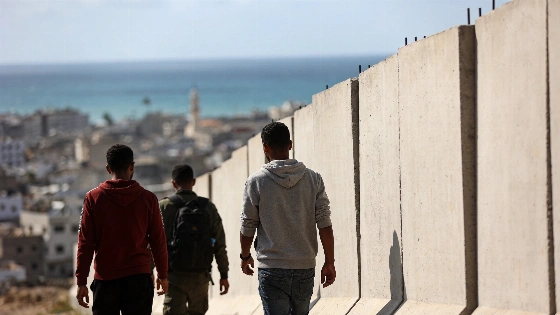
The migration crisis in this account took place on 17–18 May 2021, when around 8,000–10,000 people entered Ceuta from the Moroccan area of Fnideq in less than 48 hours. More than 1,500 were minors. Many crossed by swimming or over border barriers, and Spain’s Interior Ministry reported that roughly half of those who arrived were returned to Morocco.
The influx coincided with a sharp deterioration in relations between Madrid and Rabat over Spain’s humanitarian admission of Brahim Ghali, leader of the Polisario Front, which seeks independence for Western Sahara. Spanish officials viewed the easing of Moroccan border controls as political pressure linked to Ghali’s treatment in Spain. Prime Minister Pedro Sánchez called the events an act of defiance in parliament.
Spain’s fighters stayed on the ground.
Gil said the air surveillance squadrons followed activity in the area and military units had been alerted, though the response was not made public. Spanish interceptors, he said, remain on permanent alert and can be airborne within a maximum of seven minutes in the event of an incursion. That readiness did not lead to a scramble during the flights he described.
A separate Moroccan announcement concerned an aerobatic display by the Marcha Verde patrol in Martil, near Ceuta. Seven CAP 232 aircraft performed low passes and figures over the coast for the Fiesta del Trono. The CAP 232 display aircraft were distinct from the F-16 combat aircraft in Gil’s account. The public exhibition and the reported flights near Spanish airspace were separate events.
Gil also alleged that Moroccan spy satellites made passes before and after the mass entry, including during it. He said Spain could track their orbits and movements with its own intelligence capabilities and expected to provide a report with the data.
Gil also criticized how intelligence was handled before the crisis. According to him, the Defence Ministry had detected signs of a possible mass assault days before the information reached the Estado Mayor. The Police and Guardia Civil had their own information, as did the CNI and military intelligence. But Gil said those streams were not brought together in time to anticipate the crisis and prepare a shared response. He said the state had failed Ceuta.