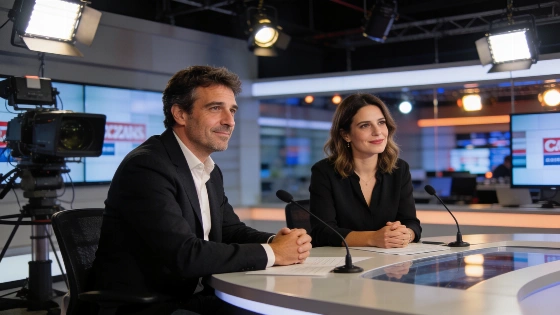
RTVE has appointed Gonzalo Miró and Ane Ibarzabal as the new faces of Malas Lenguas. The move comes as Jesús Cintora begins his summer break. The programme continues weekdays and Saturday nights.
RTVE has announced a significant change for its programme Malas Lenguas, with Gonzalo Miró and Ane Ibarzabal stepping in as presenters while Jesús Cintora is on summer leave. The transition, effective from this Monday, ensures the continuity of one of the broadcaster’s most prominent current affairs formats during the holiday period.
Gonzalo Miró, already known to viewers for his role on La 1’s Directo al grano, will now lead Malas Lenguas, bringing his experience and visibility to the show. He will be joined by Ane Ibarzabal, a journalist with a strong background in news and presenting, who has been part of the Malas Lenguas editorial team since its inception. Together, they will anchor the programme from Monday to Friday on La 1 and La 2, as well as Malas Lenguas Noche, which dominates the Saturday night slot on La 2.
This change comes at a time when Spanish television is seeing several shifts in its summer programming. The decision to entrust Malas Lenguas to Miró and Ibarzabal reflects RTVE’s strategy to maintain audience engagement and programme stability during the absence of its regular host. The broadcaster’s approach mirrors trends seen in other regions, where summer often brings temporary changes to established line-ups. For example, recent coverage of weather shifts in the Basque region, such as the return of rain and cooler temperatures in Bizkaia, highlights how seasonal changes can impact both daily life and media schedules.
Malas Lenguas has established itself as a reference point for current affairs on Spanish television, with a format that combines live discussion and in-depth analysis. The addition of Miró and Ibarzabal is expected to bring fresh energy to the show while preserving its editorial line. RTVE’s decision underscores the importance of continuity and trusted faces in maintaining viewer loyalty, especially during periods of transition. The broadcaster has not specified how long the new hosting arrangement will last, but the move is positioned as a temporary measure for the summer months. As the television landscape adapts to seasonal changes, the ability to retain audience interest remains a key challenge for public broadcasters in Spain.