Gonzalo Suárez's Remando al viento became a rare Spanish cult film. Its international cast, six Goya wins and 58-week Madrid run still define its unusual place in Spanish cinema.
Suárez died in Madrid on September 29, 2026, at the age of 92, according to EFE and other Spanish cultural institutions. His death leaves Remando al viento as one of Spanish cinema's most singular cult films. The 1987 production brought British Romantic poetry to the screen with an international cast led by Hugh Grant. It then ran for 58 consecutive weeks at Madrid's Renoir cinemas, even in its original version with Spanish subtitles.
That was only part of the story. Remando al viento opened in September 1988 and still feels strikingly modern. Suárez built a historical drama around memory, desire and terror. Its most tragic moments never become spectacle.
The film's style is controlled and spare. That choice gives its darker scenes their force.
Gonzalo Suárez died in Madrid on September 29, 2026, at the age of 92. The Spanish Academy of Cinematography named him its Goya de Honor 2026.
Mary Shelley and Lord Byron flee England in the film. During the journey, Mary recalls her relationship with the poet Shelley and the summer of 1816, when she promised to write a terrifying story. That summer became the year linked with Frankenstein. Suárez frames the group's meeting through storms, darkness, cliffs and Romantic unease.
Suárez wrote the screenplay with help from his wife Hélène Girad and Antonio Saura. His restraint is clear in the suicide of Polidori and the death of the child who does not know how to swim. The material is tragic. The direction does not turn pain into theatrical excess.
The cast gave the production an unusual international reach for its time. Lizzy McInnerny played Mary Shelley. Hugh Grant played Lord Byron. Elizabeth Hurley portrayed Clara. José Luis Gómez was Polidori, and Valentine Pelka played the poet Shelley. Virginia Mataix, Aitana Sánchez-Gijón, Bibiana Fernández, Jose María Pou, Ronan Vibert, José Carlos Rivas, Kate McKenzie and Jolyon Baker completed the ensemble.
After Suárez’s death, RTVE announced a special edition of Historia de nuestro cine featuring Remando al viento. Filmoteca Catalunya also said that its planned October 9 screening would be reworked with the Spanish Academy of Cinematography and the Catalan Academy, extending the tribute into the cultural programme itself.
Grant was not yet the star audiences would later know. He had made only two films when he joined the production. He arrived after the acclaim for Maurice, James Ivory's film shown at the Venice Festival. Maurice received the Silver Lion, the Osella de oro for Best Score and the Best Actor award for Hugh Grant and James Wilby. Spanish press accounts later called Remando al viento one of Grant's first notable leading roles.
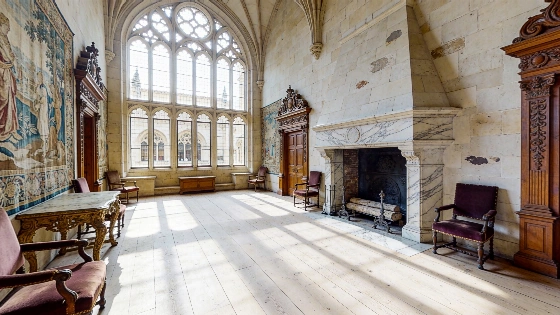
Suárez's locations give the film a strong physical identity. The production used Palacio el Rincón, a castle estate 50 kilometres from Madrid. Berlanga's La escopeta nacional had also used the site. In Remando al viento, it represents the house beside Lake Geneva where the Romantic writers gathered in 1816. Other Spanish locations included Playa de Borizu in Llanes, Guadalajara and Toledo. The production also travelled to Geneva, Svalbard and Venice.
Music adds another layer. The soundtrack prominently features Fantasía sobre un tema de Thomas Tallis by Vaughan Williams. He composed it in 1910. Peter Weir later used it in Master and Commander, which starred Russell Crowe. The opening poem is Lord Byron's Darkness, published in 1816 and delivered in Spanish through the voice of José Luis Gil.
The film's critical record matched its long theatrical life. Remando al viento won the Silver Shell for Best Director at the San Sebastián Festival and received 13 Goya nominations. It won six awards for direction, art direction, production direction, costume design for Yvonne Blake, cinematography and makeup and hairstyling. The Spanish Academy of Cinematography has specifically highlighted Suárez's Goya for Best Director for Remando al viento. The film also took the Sant Jordi Award for Best Film, the Fotogramas Critics' Award for Best Film, the Best Screenplay prize at the Paris Fantastic Film Festival and the Best Director award from the Association of Spanish Film Directors.
In 2026, RNE created a sound version with Nathalie Poza as Mary Shelley, Miki Esparbé as Percy B. Shelley, Fernando Cayo as Lord Byron, Marian Álvarez as Claire Goodwin and Víctor Clavijo as Polidori. Benigno Moreno directed it. Mayca Aguilera handled sound production, and Alfonso Latorre adapted the script. The new version shows that the film is more than a period curiosity. Its literary premise, international casting and disciplined visual language still work in another medium.
Remando al viento endures because its success came from precise choices rather than scale. Its 58-week run gave a version-original film a rare place in Madrid's cinema life. Its awards recognised craft across several departments instead of a single performance. Its locations and music turned the Romantic imagination into a physical landscape. Suárez made literary history feel real without explaining it away. That balance keeps the film a serious work of auteur cinema, not a nostalgic relic.