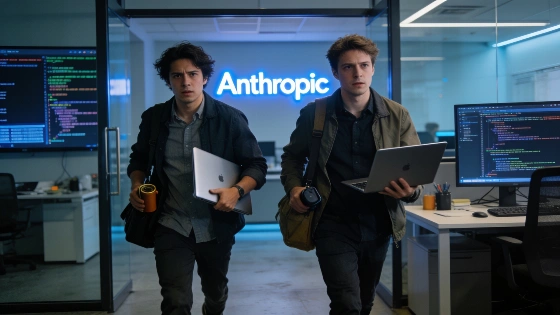
Two leading AI specialists are preparing to leave Google for Anthropic. This move follows a string of high-profile exits. The departures raise new questions about Google’s ability to compete in the AI sector.
Google is set to lose two more prominent artificial intelligence researchers to Anthropic, intensifying concerns about the company’s ability to retain top talent in a fiercely competitive sector. According to sources familiar with the situation, Jonas Adler and Alexander Pritzel—both considered central to the development of Google’s Gemini AI model—are preparing to join Anthropic, the company behind Claude. Their planned departure comes at a time when Google is already grappling with a series of high-profile exits in its AI division.
Adler has played a significant role in Google’s AI coding initiatives, while Pritzel has been closely involved in training advanced AI systems. The news follows the recent moves of Nobel laureate John Jumper to Anthropic and renowned researcher Noam Shazeer to OpenAI. These departures have unsettled investors and cast doubt on Google’s long-term position in the race to develop leading AI models. Alphabet’s shares reflected this uncertainty, closing slightly lower after a drop of up to 1.2% during Wednesday’s trading session.
The wave of exits highlights the growing pressure on Google from rapidly advancing startups like Anthropic and OpenAI. Both companies are reportedly nearing public offerings, creating opportunities for incoming employees to benefit financially if they join before an IPO. For established tech giants, this trend poses a challenge in retaining even their most accomplished staff, as the prospect of significant financial rewards elsewhere becomes increasingly attractive.
Internal shifts at Google may also be contributing to the departures. In one recent case, computing resources allocated to a project led by Noam Shazeer were reassigned to a team at Google DeepMind in London, a move intended to foster greater collaboration and streamline the company’s AI pre-training efforts. Such changes in resource allocation have reportedly prompted some employees to reconsider their future at the company.
Neither Adler, Pritzel, Jumper, nor Shazeer responded to requests for comment. Anthropic declined to comment on the matter. A Google spokesperson maintained that the company remains confident in its ability to attract and retain top AI talent, referencing recent remarks by Google DeepMind CEO Demis Hassabis. Hassabis noted that while competition for talent is intense, Google continues to maintain the largest and most diverse research team among leading AI labs.
For context, the global AI sector has seen a surge in talent mobility as companies race to develop more advanced models and secure a competitive edge. Anthropic and OpenAI, both founded by former employees of major tech firms, have rapidly gained prominence and investment. The ongoing movement of key researchers between these organizations underscores the volatility and high stakes of the current AI landscape, with implications for innovation, market leadership, and the future direction of artificial intelligence development worldwide.