A fresh series of earthquakes has shaken Granada, adding to the damage from August's major tremors. More than 41,000 claims for compensation have been filed, and repairs to homes and public buildings are ongoing.
Granada’s earthquake crisis deepened this week as five new tremors struck the province within hours, adding to the destruction left by August’s stronger quakes. Residents in towns such as La Zubia, Armilla, and Ogíjares woke to more shaking, with the largest quake reaching 2.3 on the Richter scale. The aftershocks have disrupted daily life and forced more families to leave homes with growing structural damage.
The latest sequence began early Wednesday, when Huétor Vega recorded a 1.5-magnitude quake at 7:54 a.m. By mid-morning, Granada city felt another jolt, followed by three more tremors in Armilla and La Zubia. All were shallow, and the rapid succession made clear that the seismic series triggered by the 4.8-magnitude quake in Alhendín on August 15 is still ongoing.
According to the Instituto Geográfico Nacional, 1,279 tremors were recorded in the two weeks following the August 15 earthquake, with 41 quakes registered on September 2 alone.
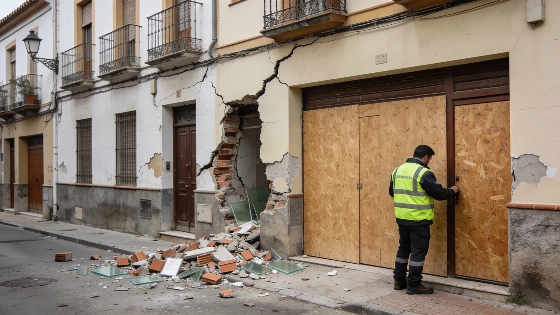
Data from the Instituto Geográfico Nacional shows that over a thousand seismic events have been logged since mid-August, with more than a hundred strong enough to be felt. The most severe—two quakes of 4.8 and several above magnitude 4—left cracked walls, damaged roofs, and closed public buildings across Las Gabias, Armilla, Ogíjares, Churriana de la Vega, La Zubia, and central Granada.
The financial impact is growing. The Consorcio de Compensación de Seguros has received 41,228 claims for earthquake-related damage, with estimated payouts reaching €105 million as of September 1. The University of Granada faces €3.5 million in repairs, and municipal inspectors are still assessing the full extent of the damage. In the Zaidín district, the closure of the Biblioteca Francisco Ayala highlights the strain on public infrastructure, with essential services disrupted and no clear timeline for reopening.
Granada is used to seismic activity, but the scale and persistence of this series have tested both residents and local authorities. Many people remain displaced, and the total cost—both financial and social—continues to rise. For comparison, other Spanish regions have faced weather-related disruptions, as reported earlier, but Granada’s situation stands out for its relentless sequence and widespread effects.
Spanish authorities have announced plans to declare Granada a zone seriously affected by a civil protection emergency in September, which will unlock additional support measures for the region. Earlier, local government allocated €1 million for urgent repairs, and the University of Granada, city council, provincial administration, and Chamber of Commerce issued a joint statement on coordinated response efforts.
The high number of insurance claims and ongoing closure of public buildings show the need for better preparedness and faster response. As the earthquakes continue, restoring safety and supporting those still displaced remain urgent priorities. In a region where the ground is unpredictable, building resilience into housing and emergency planning is essential to reduce future disruption and loss.