Syros Cats, a UK-registered charity on the Greek island of Syros, is recruiting volunteers for its 2027 stray-cat care program. The intake is split into two periods: January to June and July to December. Applications for the first period opened on September 1, 2026, and closed on September 30. Applications for stays from July through December are scheduled to open on November 1, 2026, information from Las Provincias. Volunteers must commit to at least one month and are expected to work about six hours a day, five days a week.
The program is aimed at individuals or couples ready to take on daily animal-care duties, from feeding and cleaning to monitoring the health of domestic and feral cats. Each volunteer gets a private bedroom in a shared house. The kitchen, bathroom, and living spaces are communal. Breakfast and basic utilities are included, but participants must pay for travel to Syros and for meals beyond breakfast. This is a volunteer exchange, not paid employment.
Requirements and Daily Routine
Applicants should be in good physical health, self-sufficient, and able to meet the demands of animal care. Previous work experience is required; experience in veterinary assistance or with feral cats is an advantage. Syros Cats also welcomes dedicated animal lovers who can handle cleaning and supply management, while following supervisors’ instructions. The charity says candidates under 25 may find it harder to demonstrate the necessary initiative, though there is no strict age limit. Digital nomads are accepted if they can fit their online work around the fixed volunteer schedule. Stays with children or pets are not permitted, and the organization values volunteers able to commit for several months.
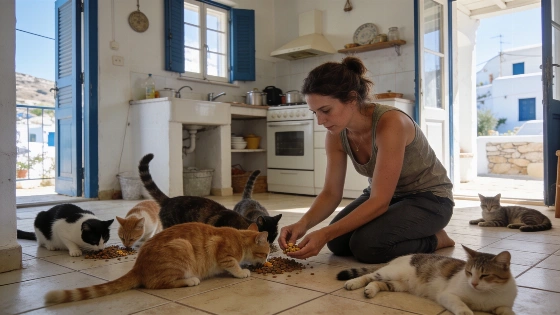
The daily schedule is built around two basic shifts. The morning shift runs from 8:00 to 13:00, with feeding duties for cats with special needs, outdoor colonies, and cats living on the streets or beaches. Volunteers administer treatments, clean litter boxes, wash bowls, change bedding, and watch for signs of illness. They must report any health concerns promptly. A second shift starts an hour before sunset. It covers evening feeding and water checks, along with medication, cage cleaning, and preparing cats for the night. Other duties may include vet visits, socializing kittens, gardening, laundry, and helping with sterilization efforts. Volunteers must wear gloves and appropriate footwear: the rural environment can bring encounters with snakes, scorpions, and unpredictable feral cats.
Application Process and Practical Details
The official application form for 2027 will appear on the Syros Cats volunteering page when each application window opens. Applicants must state their preferred dates and work history, as well as any relevant experience with cats. The organization warns that general inquiries or emails will not replace the formal application. In previous years, volunteers paid a non-refundable administrative fee of 10 euros, but the 2027 details have not been confirmed. Non-EU passport holders must follow the Schengen Area’s 90-day rule within any 180-day period. The European Health Insurance Card covers public healthcare during temporary stays, but not private care or repatriation, so additional travel insurance is recommended.
The wider animal-welfare context in Greece includes enforcement cases unrelated to Syros Cats. In a separate case reported by Kathimerini, police found more than 200 animals, including 127 dogs, 73 cats, and 12 goats, living in poor conditions. They were kept in dirty spaces without adequate shelter. The case was not connected to the Syros volunteer program.
Those seeking paid positions can explore other animal-care jobs in Europe that include accommodation, Syros Cats suggests. The charity’s program supports the welfare of Syros’s stray cats while offering participants a chance to gain personal experience through volunteering.