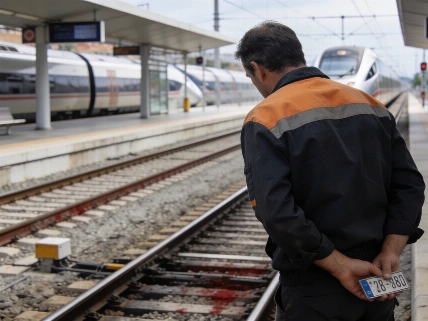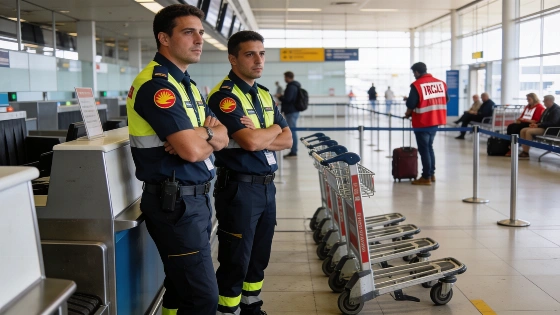
Barcelona-El Prat Airport faced disruption as Groundforce ground-handling staff, represented by the CGT union, mobilized from August 4 over deteriorating working and safety conditions. The dispute later escalated into an indefinite strike that began on September 18. It involved 1,179 workers responsible for check-in, boarding and flight coordination. CGT cited staff shortages and high employee turnover, along with gaps in occupational-risk prevention and excessive workloads. The action affected one of Spain’s busiest airports and airline operations across both terminals.
The CGT, which holds a majority on the company’s works council, also raised concerns about training for new hires. Union spokesperson Esther García said employees remained open to dialogue, but frustration had reached a breaking point. The strike was expected to affect airlines operating from both terminals, including Air Europa, Lufthansa, Air France, KLM and Qatar Airways. The dispute also involved the dismissal of three employees, two of them prevention delegates on the strike committee.
Groundforce, part of the Globalia group, holds licenses to provide ground services at twelve of Spain’s largest airports: Madrid, Alicante, Valencia, Palma, Ibiza, Málaga, Las Palmas de Gran Canaria, Tenerife, Lanzarote, Fuerteventura and Bilbao. Earlier in 2026, other unions, CCOO, UGT and USO, also called indefinite strikes at Groundforce, reflecting wider tensions in the sector.
Between August and September, airlines served by Groundforce in Barcelona were scheduled to operate around 11,600 flights, offering nearly 2.4 million seats. The Ministry of Transport and Sustainable Mobility estimated that up to 2 million passengers could be affected if the strike continued through the peak summer period. To limit the impact, the ministry set minimum service levels. In August, these were 80% for flights to non-peninsular destinations or those under public service obligations, with the level dropping slightly in September. For international and long domestic routes without a viable public transport alternative, minimum services were set at 58% in August and 57% in September. Shorter domestic routes were to operate at minimum levels of 35% in August and 36% in September.
Disruptions at major Spanish transport hubs are nothing new. Madrid recently faced impressive traffic changes due to tunnel closures for infrastructure works, as detailed in this report on the M-30 tunnel closure. Such events show how industrial action and infrastructure projects can leave Spain’s transport network vulnerable, especially during the busy summer season.
Barcelona-El Prat is Spain’s second-busiest airport and a basic gateway for domestic and international travel. Groundforce serves airlines based in Europe, the Middle East and North America, giving the strike a broad potential impact. The dispute reflected persistent challenges in Spain’s aviation sector, where labor relations and service continuity remain under pressure as passenger volumes and operational demands rise.
On October 17, CGT called off the indefinite strike after reaching an agreement with Groundforce, which the union described as positive for both parties. The settlement immediately ended scheduled five-hour-and-45-minute shifts, provided for assessments of psychosocial risks and workload levels in the T1 and T2 terminals, and called for a review of the 2024 annual working schedule so applicable supplements could be paid where due. Groundforce also agreed to review the time workers need to move between airport locations, examine overtime hours and establish a procedure for employees to attend airline-provided training.
The agreement ended the strike, but the three dismissals remained unresolved. CGT continued to demand the employees’ reinstatement, keeping up pressure outside the formal strike. It announced demonstrations at Terminal 1 on October 19 and 26 and November 2, from 11:00 to 14:00, and reserved the right to pursue legal action. The union said mobilizations would continue until the workers returned to their jobs.
During the strike, travelers faced possible delays, cancellations and longer waits at check-in and boarding. Authorities advised passengers to check with their airlines for updates and allow extra time at the airport. The agreement ended the stoppages, while the workers’ dismissals remained the basic outstanding issue.