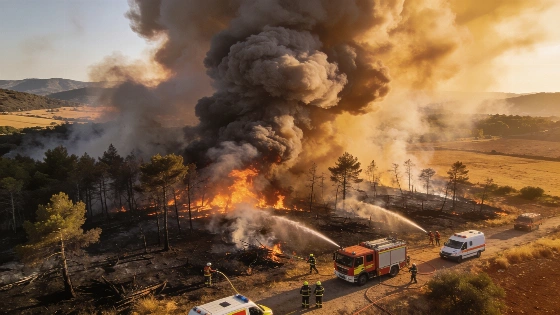
A massive wildfire in Guadalajara has led to the evacuation of 34 municipalities and burned nearly 30,000 hectares. Authorities are now considering allowing some residents to return, as containment efforts show progress.
The wildfire that erupted last Thursday in La Mierla, Guadalajara, has now scorched approximately 29,000 hectares, prompting the evacuation of 34 municipalities across Castilla-La Mancha. Regional president Emiliano García-Page confirmed after a meeting with emergency coordinators that, while the main focus remains on containment, officials are beginning to assess the possibility of residents returning to their homes in the coming days.
According to the latest update from the regional forest fire prevention and response service (Infocam), 14 additional municipalities remain under confinement orders, bringing the total number of affected people to over 1,200. The situation remains dynamic, but technical teams report that the fire's advance toward Soria has been largely halted. The current strategy is to keep the blaze within a controlled perimeter and begin extinguishing it from the inside, a shift that reflects cautious optimism among emergency leaders.
Despite this progress, García-Page emphasized the need for vigilance, noting that sudden changes in weather or unforeseen incidents could still alter the situation. As of late morning, 72 ground units and 394 personnel were deployed, with Infocam highlighting the intense overnight operations involving controlled burns and heavy machinery to reinforce defensive lines and target the most active fire fronts. The president described the deployment of 600 operatives overnight as unprecedented for the region, marking the largest mobilization of both the Military Emergency Unit (UME) and aerial resources in Castilla-La Mancha's history. On Monday alone, 29 aircraft were simultaneously engaged in firefighting efforts.
Following consultations with technical teams, García-Page stated that the main objectives—protecting residents and safeguarding urban centers—have been met in an orderly manner. He noted that many of those evacuated were tourists rather than permanent residents, and stressed that the complexity of the operation stems from the need to secure numerous population centers, a challenge that has made this incident one of the most demanding wildfire responses in Spain in recent years. The president estimated that there is now a 90% level of security for the affected towns, which is why the phased return of residents is under consideration.
For context, Spain has faced several large-scale emergencies in recent years, including natural disasters that have tested local and national response systems. The scale of the current operation in Guadalajara stands out not only for the number of personnel and resources involved, but also for the logistical challenges of evacuating and protecting dispersed rural communities. This situation echoes broader debates about regional preparedness and the impact of such events on local identity and infrastructure, as seen in other high-profile incidents like the urban redevelopment controversies in Valencia, discussed in detail in this analysis of the Mestalla stadium debate. As the emergency response continues, authorities remain focused on stabilizing the situation and minimizing further disruption for residents and visitors alike.