The largest wildfire in Castilla-La Mancha’s history has reached stabilization. Authorities expect control soon, despite strong winds. Five municipalities see evacuation orders lifted as optimism grows.
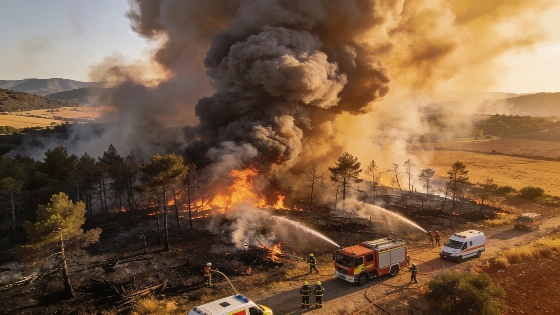
The wildfire that erupted in La Mierla, Guadalajara, has now entered a stabilization phase after burning through more than 32,000 hectares, marking the most extensive fire ever recorded in Castilla-La Mancha. Regional president Emiliano García-Page confirmed the development on Wednesday from the advanced command post in Tamajón, joined by Prime Minister Pedro Sánchez, who visited the affected area exactly one week after the blaze began.
Emergency teams have been working non-stop since last Thursday to contain the flames, facing challenging conditions including persistent strong winds. Despite these obstacles, García-Page announced that the fire is expected to be under control by Thursday, though he cautioned that the coming day would still be difficult for crews on the ground. For the first time since the outbreak, authorities believe they have gained the upper hand, allowing for a more optimistic outlook on the firefighting efforts.
As a result of the progress, evacuation orders have been lifted for five municipalities: Riofrío del Llano, Cardeñosa, Santiuste, Angón, and Rebollosa de Jayaque. The evacuation of La Mierla, where the fire originated, is also likely to end within the day. García-Page highlighted that, thanks to coordinated action, 40 population centers were protected from the advancing fire, noting that without special measures, up to six communities could have been lost.
During his visit, Sánchez reiterated the urgent need for a national agreement on climate emergency, echoing calls he made during the Los Gallardos fire in Almería. He emphasized that the climate crisis should not only be addressed in the aftermath of disasters, but through proactive public awareness and political commitment. Sánchez pointed out that Spain has already faced 22 major wildfires from January to July this year—four times more than the previous year—and that the country has averaged over 100,000 hectares burned annually in the last decade.
The Prime Minister assured that the government will continue to provide resources for both firefighting and the recovery of affected areas, though he did not specify the financial support at this stage. However, Third Vice President and Minister for Ecological Transition, Sara Aagesen, previously announced that the government would cover 50% of the recovery costs for La Mierla. Both Sánchez and García-Page praised the unprecedented coordination between national and regional authorities, describing the deployment as historic for Castilla-La Mancha and underlining the effectiveness in safeguarding both residents and emergency personnel.
Calls for a unified response to climate emergencies have become more frequent in Spain, especially as the country faces increasingly severe wildfire seasons. The debate over national climate policy has also intersected with other government priorities, as seen when Sánchez traveled to Algiers to negotiate energy supplies and address broader environmental and security concerns—a move detailed in the report on Madrid’s diplomatic efforts with Algeria.
Wildfires have become a recurring threat in Spain, particularly in regions like Castilla-La Mancha, where dry conditions and high winds can quickly escalate local incidents into large-scale disasters. The La Mierla fire has underscored the vulnerability of rural communities and the critical importance of rapid, coordinated emergency response. As climate patterns shift, Spanish authorities are under increasing pressure to adapt strategies for prevention, mitigation, and recovery, balancing immediate needs with long-term resilience planning. The current stabilization of the Guadalajara blaze offers a moment of relief, but also highlights the ongoing challenges posed by extreme weather and environmental risks across the country.