Two Guardia Civil generals told a judge they were instructed to keep the UCO passive in politically sensitive cases. The orders came as the unit handled probes linked to the government and Pedro Sánchez’s family.
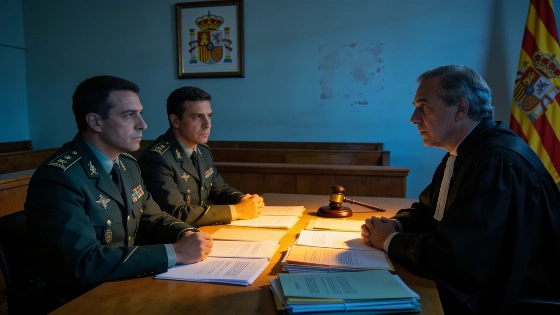
Two high-ranking Guardia Civil officers, Rafael Yuste and Alfonso López Malo, have confirmed before Spain’s Audiencia Nacional that they were told to ensure the Unidad Central Operativa (UCO) remained passive in cases with political implications. Their testimony, delivered to Judge Santiago Pedraz, comes as scrutiny intensifies over the handling of investigations involving figures close to the government and the family of Prime Minister Pedro Sánchez.
According to sources present at the hearing, both generals stated that the instructions they received were to keep the UCO “de perfil”—to avoid a proactive stance—when dealing with matters that could affect political interests. While the generals clarified that these directions were understood as general and not aimed at a single party, the timing coincided with the UCO’s involvement in several high-profile cases touching the government and Sánchez’s relatives.
During the session, neither Judge Pedraz, the prosecution, nor the defense teams questioned the generals about whether they perceived these instructions as undue pressure. This omission leaves open questions about the intent and impact of the guidance, especially as the UCO’s role in politically charged investigations remains under the spotlight.
In their earlier statements to UCO agents on May 27, Yuste and López Malo pointed to Leonardo Marcos, the former director general of the Guardia Civil, as the official who ordered them to ensure a report on the case involving David Sánchez—brother of the Prime Minister—concluded with a finding of “nothing to see.” One of the generals also recounted that Manuel Llamas, the deputy operational director of the force, later reinforced the instruction to “stay on the sidelines” in such cases.
This development follows a series of incidents where political influence over law enforcement and judicial processes has come under public debate in Spain. Similar concerns about political maneuvering have surfaced in other recent cases, such as the tense negotiations between regional leaders and parties in Andalusia, as detailed in coverage of the last-minute talks between Moreno and Vox. These episodes highlight ongoing tensions over the independence of key institutions and the boundaries of political intervention.
The UCO is a specialized unit within the Guardia Civil, tasked with investigating complex crimes, including corruption and organized crime. Its impartiality is considered crucial for public trust in Spain’s justice system. The current case, reportedly linked to a network allegedly led by former Socialist Party member Leire Díez, has brought renewed attention to the pressures faced by law enforcement when political stakes are high. As the investigation continues, the role of senior officials and the clarity of their instructions are likely to remain central issues for both the courts and the public.