Juan Pablo, known as Juampy, transformed a decommissioned bus into his home on the outskirts of Madrid. By generating his own electricity and using gas for cooking, he has eliminated utility bills and embraced a minimalist lifestyle. His story highlights the challenges and rewards of living off-grid in Spain.
Juan Pablo, better known as Juampy, has turned a discarded city bus into a fully functional home on a rural property near Madrid. After purchasing the vehicle for just over €1,200 from a scrapyard, he spent more than a year navigating regulations and carrying out extensive renovations to make the bus habitable and legally recognized as a residence.
Juampy was no stranger to this type of bus—he once drove the same model on the 514 line between Alcorcón and Príncipe Pío. When he found a similar vehicle in Galicia, he brought it to Madrid and began the transformation. The process involved far more than removing seats: he installed a kitchen, bathroom, bedroom, storage, and energy systems, while preserving some original features from its days as public transport. According to Juampy, the official approval process required technical documentation, workshop certificates, and a final inspection, taking over a year to complete.
Energy Independence
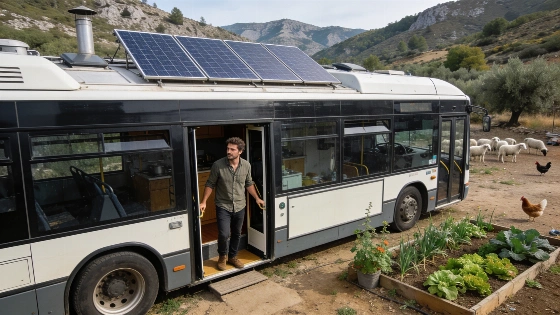
Living off-grid, Juampy relies on solar panels and batteries for electricity, which power lighting and low-consumption devices. For cooking, he uses gas, explaining that electric stoves would quickly drain his batteries, especially at night. In winter, he combines propane—chosen for its reliability in freezing temperatures—with a wood stove, using firewood collected from the surrounding land. This setup allows him to avoid paying for electricity and water, with his only regular expenses being vehicle insurance, food, and minimal maintenance.
Functional Interior
The interior of the bus blends practicality with personal history. The kitchen, inherited from his grandmother and nearly sixty years old, was repainted white to create a sense of space. Juampy added a sink, appliances, storage areas, and a full bathroom. He recommends an oval shower tray to prevent dirt from accumulating in corners. The bedroom is separated by a curtain, which helps conserve heat or cool air at night. Every item inside is chosen for its function, making the most of the limited space.
Managing energy is crucial, especially when the bus is not connected to the grid. Juampy uses an integrated battery system, which meets the requirements for fixed installations under Spanish vehicle regulations. He notes that portable batteries are treated differently by authorities, depending on whether they are fixed or simply carried as cargo.
Rural Life and Work
Originally parked in an industrial area of Fuenlabrada, the bus now sits on a 10,000-square-meter plot in the Madrid mountains. Juampy shares the land with sheep, chickens, turkeys, and a small vegetable garden. The bus also serves as his workspace, where he creates videos and streams live broadcasts. While his income remains modest, the low cost of living allows him to sustain his chosen lifestyle.
Reflecting on his decision, Juampy says, “It’s not about how much money you have, but how much time you have to enjoy it.” He is clear that the initial purchase price does not include the cost of renovations, legal approvals, or ongoing maintenance. His experience is a personal choice, not a universal blueprint for living cheaply on wheels.
For those considering a similar path, Spain’s regulations for converting vehicles into homes are strict and require careful planning. The process involves technical projects, compliance with safety standards, and official inspections. While living off-grid can reduce monthly expenses, it demands resourcefulness, discipline, and a willingness to adapt to the challenges of rural life.