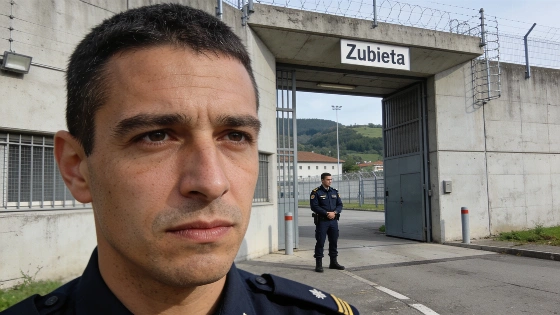
The Basque Government has approved third degree prison status for Henri Parot. The former ETA leader, convicted for 39 murders, will soon leave Zubieta prison. Victims’ groups call the move unacceptable.
The Basque Government’s decision to grant third degree prison status to Henri Parot, a former ETA leader convicted of 39 murders and dozens of attempted attacks, has drawn immediate criticism from victims’ associations. Parot is set to leave Zubieta prison in Gipuzkoa after more than thirty years behind bars.
The Basque Department of Justice, led by María Jesús San José, confirmed the move after a unanimous recommendation from the prison’s Treatment Board. The decision is not final: the National Court’s prosecutor will review the case and can challenge it before the prison oversight judge. According to El Independiente, Parot received third degree status on September 9, 2026, after serving 36 years since his arrest in April 1990. He had already spent time under a semi-liberty regime (Article 100.2) since July of the previous year.
Parot's cumulative sentences amounted to approximately 4,800 years in prison for murders, attempted murders, kidnappings, bombings, and ETA membership.
Now 67, Parot had been allowed to leave prison on weekdays for volunteer work, returning each night. In 2025, he was granted a six-day leave after submitting a letter to the Treatment Board in which he rejected "all violence" and acknowledged the suffering caused by his actions. The judge noted that Parot had served more than three-quarters of his sentence, had no disciplinary sanctions, and had participated in rehabilitation programs. Previous short-term leaves passed without incident, and the risk of escape was considered low. The current third degree status is based on Article 83 and could allow even more freedom if Article 86 with electronic monitoring is applied, as reported by El Independiente.
Victims’ groups reject these arguments. The Colectivo de Víctimas del Terrorismo (Covite) called the move "fraudulent," pointing to Parot’s role in the Argala commando unit, which carried out some of ETA’s deadliest attacks, including the 1987 Zaragoza Guardia Civil barracks bombing that killed 11 people, five of them children. Covite’s president, Consuelo Ordóñez, said Parot has never shown genuine public remorse or broken with ETA’s ideology, and accused the Basque Government of acting in the interests of the abertzale left.
Parot was arrested in Seville in 1990 while leading ETA’s mobile commandos, responsible for a series of attacks over 12 years. His name became associated with the ‘doctrina Parot’, a legal precedent that extended prison terms for terrorists until it was overturned by the European Court of Human Rights in 2013, leading to the release of dozens of ETA members.
Since 2021, the Basque Government has repeatedly applied Article 100.2 to former ETA leaders, including Parot, using it as an intermediate step toward more lenient prison regimes. This trend has sparked ongoing accusations from victims' organizations of a 'hidden amnesty' and has made the issue of third degree status for ex-ETA members a politically sensitive topic in Spain.
El Mundo
The current third degree status, granted under Article 100.2 of the Prison Regulations, is often a step toward even more flexible regimes. Covite warns that such measures can quickly lead to full parole under Article 86, further reducing time served for serious crimes. The group argues that written statements and general condemnations of violence are not enough to justify leniency in cases involving mass murder and terror.
Spain’s approach to ETA prisoners has changed since prison powers were transferred to the Basque Government. Supporters say reintegration and rehabilitation are important for social peace, while critics see a pattern of concessions that undermine justice for victims. The Parot case highlights the deep divisions in Spanish society over how to address the legacy of ETA’s violence. The government’s willingness to relax prison conditions for high-profile convicts, even amid public outrage, points to a political calculation rather than a move toward reconciliation. As long as remorse remains private and the wounds of the past are unaddressed, these decisions will continue to provoke controversy and mistrust.