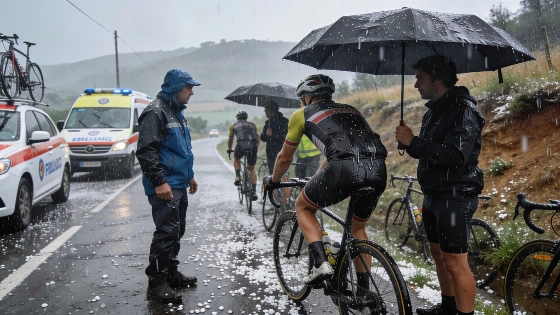
A violent hailstorm and thunder forced the suspension of the third stage of the Vuelta a España. The sudden weather event disrupted the race and left organizers and cyclists facing difficult conditions. The incident highlights the unpredictability of major sporting events in Spain.
The third stage of the Vuelta a España was dramatically interrupted when a sudden and intense hailstorm, accompanied by thunder, swept across the route. The severe weather forced organizers to halt the race, as conditions quickly became unsafe for both cyclists and support teams. The abrupt stop left the peloton scattered and the competition's schedule in question, underscoring the vulnerability of outdoor sporting events to extreme weather.
According to reports, the scene was described as 'brutal,' with hailstones covering the road and visibility dropping sharply. Riders and staff sought shelter as the storm intensified, and race officials moved swiftly to ensure safety. The incident occurred during a critical phase of the stage, adding to the tension and uncertainty for teams and fans following the event.
The Vuelta a España is one of cycling's most prestigious Grand Tours, attracting top athletes such as Pogačar and drawing significant attention from the international sports community. The disruption caused by the hailstorm is a rare occurrence in the race's history, highlighting the challenges of organizing large-scale events in unpredictable weather conditions. As the situation unfolded, organizers worked to assess the impact on the overall race schedule and rider safety.
Spain has a long tradition of hosting major sporting events, and weather-related disruptions, while uncommon, are not unprecedented. For example, other high-profile events in the country have faced unexpected challenges, as seen when Argentine tennis player Francisco Comesaña advanced in the ATP 250 tournament in the US after overcoming difficult conditions. Such incidents serve as reminders of the logistical complexities involved in international competitions and the need for contingency planning.
The Vuelta a España continues to be a focal point for cycling fans and sports media, with each stage closely monitored for developments. The organizers' response to the hailstorm will likely be scrutinized in the coming days, as teams and officials evaluate how best to proceed with the remaining stages. The event also raises questions about the increasing frequency of extreme weather events and their impact on sports in Spain and beyond.
As the race resumes, attention will remain on both the athletes' performance and the measures taken to ensure safety. The Vuelta a España's ability to adapt to such challenges will be critical in maintaining its reputation as a premier event on the international cycling calendar.