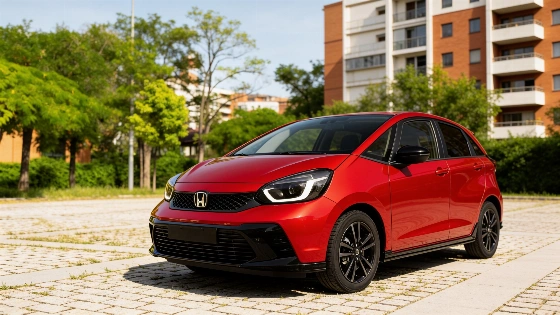
The Honda Jazz celebrates 25 years with a hybrid engine, Eco label, and a unique Magic Seats system that expands boot space to 1,200 litres. Its compact size and flexible interior keep it ahead in the competitive B-SUV segment.
Honda Jazz marks its 25th anniversary by doubling down on the qualities that have made it a standout in the compact SUV market: a flexible interior, efficient hybrid power, and a price point that keeps it within reach for many Spanish drivers. With a starting price in the €20,000 range, the Jazz continues to challenge rivals like the Toyota Yaris Cross and Renault Captur, offering a rare blend of practicality and innovation.
Originally launched in Japan in 2001 as the Fit, the Jazz quickly found its niche by maximizing space within a four-metre footprint. The key to its enduring appeal lies in the Magic Seats system—a clever design that allows the rear seats to fold flat or flip up, transforming the cabin to suit either passengers or cargo. This flexibility means the Jazz can offer up to 1,200 litres of boot space, a figure that outpaces many larger vehicles and remains a benchmark in its class.
The hybrid journey began in 2011, when Honda introduced its IMA system to the Jazz. This early setup combined a 1.3-litre i-VTEC petrol engine with a lightweight battery and a CVT gearbox, laying the groundwork for the hybrid technology that now dominates the Spanish market. Today, nearly half of all new car sales in Spain are hybrids, a trend that the Jazz helped to shape.
Hybrid Evolution
The third-generation Jazz, arriving in 2015, was tailored for European tastes with a revised suspension and a longer wheelbase for improved comfort. The Magic Seats system also evolved, offering four distinct configurations to further enhance versatility. By 2020, the fourth-generation Jazz (MK4) debuted with a refreshed design and, for the first time, a Crosstar variant aimed at drivers seeking SUV styling, higher ground clearance, water-resistant upholstery, and roof rails.
Inside, the Jazz kept pace with digital trends, introducing a more modern dashboard and seamless connectivity through Apple CarPlay and Android Auto. The My Honda+ app added another layer of convenience, allowing owners to access vehicle functions remotely and securely.
Under the bonnet, the latest Jazz models feature Honda's e:HEV hybrid system, pairing a 1.5-litre i-VTEC petrol engine with two electric motors. This setup delivers 107 horsepower and is matched to an e-CVT transmission, balancing performance with efficiency. The 2026 range offers three trim levels, with prices starting at €28,000 for the most recent models.
For drivers comparing the Jazz to other compact electrified SUVs, it's worth noting how the segment has evolved. Models like the Skoda Epiq and Renault 4 E-Tech have entered the urban EV race, each promising their own take on space and value, as explored in this comparison of city-focused electric crossovers.
Looking ahead, the Honda Jazz remains a reference point for practical urban mobility. Its Magic Seats system continues to set it apart, while the hybrid drivetrain ensures it meets both environmental standards and everyday needs. As the market shifts toward electrification, the Jazz's blend of compact dimensions, flexible space, and proven reliability keeps it firmly in the conversation for Spanish families and city drivers alike.