Pedro Sánchez has revived the coalition's housing decrees before the 29 November election. PSOE and Frente Amplio now claim credit for the measures while blaming each other for delays and resistance.
The first housing decree fell by 178 votes to 172 in Congress. The second was rejected by 184 votes to 166. Junts joined PP and Vox in both defeats.
Pedro Sánchez has now approved the disputed decrees again before Spain's 29 November election. PSOE and Frente Amplio remain in the same government, but each side presents the measures as its own work. The immediate fight is over who can claim the strongest answer to the housing crisis.
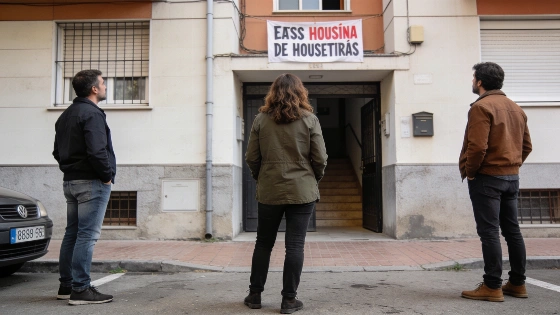
The first defeat triggered the election call. It also turned a government measure into the coalition's first major campaign clash. Protests linked to the eviction of Maricarmen had already pushed housing higher up the political agenda.
The first housing decree was rejected by 178 votes to 172, while the second fell by 184 votes to 166. Junts joined PP and Vox in providing the decisive opposition votes.
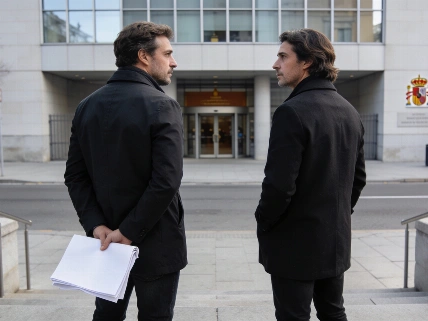
Both camps are now keeping their public appearances apart. Sánchez defended the decrees after the Council of Ministers approved them again. He called them a necessary response to a social emergency.
Soon afterwards, Ernest Urtasun and Mónica García appeared for Frente Amplio. They stressed the pressure their ministers had applied inside the executive.
That was no accident.
The split was visible before the latest vote. At the previous Council of Ministers briefing, four Socialist ministers spoke from the usual government press room. Five ministers from Sumar defended the housing measures at the Ministry of Labour. In Congress, Isabel Rodríguez and Pablo Bustinduy divided the presentation of the two texts.
The arrangement points to a simple electoral calculation. PSOE wants more space on an issue where Sumar has usually pushed the more interventionist proposals. The Socialists' main housing achievement so far is the Housing Law, whose application depends on the autonomous communities.
In February, Socialists argued that freezing rents when contracts were renewed by decree could be unconstitutional. The latest decree extends existing rental contracts until 31 December 2027. It also covers contracts that expire during 2028.
The package went beyond contract extensions. It also envisaged extending protection against certain evictions until 2030, regulating seasonal and room rentals, and placing restrictions on investment funds acquiring residential property.
Sánchez has moved closer to Frente Amplio's language. During his appearance, he repeatedly defended intervention in the rental market. He described automatic renewal as an ambitious debate that should continue.
For PSOE, the shift turns a measure it once resisted into a central campaign proposal. Frente Amplio has no intention of giving up ownership of the issue.
Its representatives say their ministers and parliamentarians forced the Socialists to accept measures that had been rejected or delayed. They point to the March confrontation, when Sumar ministers refused to enter the Council of Ministers until the rental extension was accepted.
They also recall a parliamentary proposal to ban speculative purchases. PSOE did not support it.
The dispute has a longer memory. After the March decree collapsed in Congress, Socialists said their coalition partner had driven the initiative and that it lacked enough votes.
Frente Amplio now uses that episode to argue that PSOE changed course only after losing ground in the housing debate. The criticism has also focused on Isabel Rodríguez. Her absence during the March debate angered Sumar deputies. She later defended a text that included measures the Socialists had previously opposed.
For Frente Amplio, the public approval of the new decree and Sánchez's decision to announce it would have been unthinkable without the alliance's presence in government. The alliance supports the demonstrations that began after Maricarmen's eviction.
It also backs the future general strike promoted by figures including Antonio Maíllo. Frente Amplio wants the 29 November election to act as a referendum on housing.
Its own position is not secure.
The alliance still has no candidate after Yolanda Díaz stepped aside. An announcement is expected this week. Frente Amplio must also complete integration agreements with other parties, with Podemos as the main target. Nine days remain before the deadline for presenting coalitions.
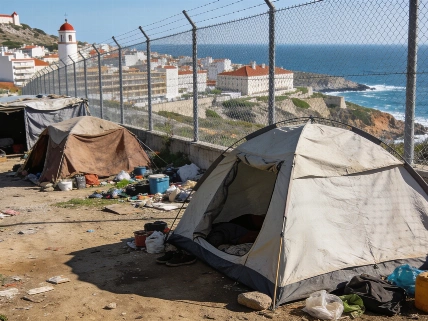
The scale of the crisis raises the stakes. Reuters cited official statistics showing that Spanish house prices rose over the past year at roughly three times the pace of wages. More people are being pushed toward the rental market.
After the parliamentary defeat, protests against rising rents and evictions took place in more than 50 Spanish cities. Housing is now a central campaign issue.
Housing is no longer just another item in the coalition programme. PSOE is using the same decree to claim a more interventionist profile. Frente Amplio is using it to show that pressure from its side produced the change.
Voters will judge the measures. They will also judge which party appears to have forced them into existence. The coalition's weakness is already clear: one government is presenting one housing policy through two competing political brands.
The consequences for tenants are immediate. The defeated measures included a 2% cap on rent increases, a moratorium on evictions for vulnerable households, extensions for expiring contracts and tax incentives for regulated rentals.
Once Congress rejects the decree, those provisions stop applying. Tenants in regions without officially designated stressed rental areas may then rely on the more limited protection in the 2023 Housing Law.
The legal route explains why the measures can return so quickly. A decree-law takes effect after the government approves it. Congress must ratify it within 30 days. If Parliament rejects it, the decree-law loses its legal effect.
After Parliament is dissolved, the government still has the power to adopt decree-laws. Ratification may pass to the Permanent Deputation, where progressive forces can hold a majority without Junts.
The election timetable sets a firm deadline. Sánchez has called voters to the polls on 29 November. That is the earliest possible date after an immediate dissolution because Spanish law requires elections to take place 54 days after the announcement.
The housing fight will now run on two tracks. It is a dispute over policy and a test of coalition credibility. It is also a contest over which party can turn public anger into votes.