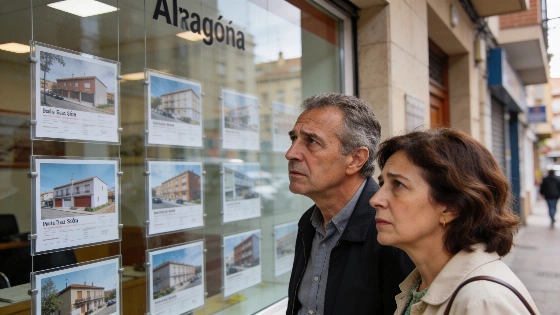
Aragón’s property market is losing momentum. After a year of steep price increases, up 12.4 percent, information from the latest official summary from the University of Zaragoza and Colegio de Registradores, buyers are stepping back and sales are starting to slip. The region, once known for fast-paced real estate deals, is slowing down, changing the outlook for sellers and would-be buyers.
For months, the market looked unstoppable. But the latest data show a 1 percent drop in property sales during the second quarter compared with the first. Analysts say the record-setting pace seen in 2025 won’t return next year. Soaring construction costs and a shrinking supply of homes, both for sale and for rent, have pushed prices higher and made it harder for many people to buy. The average price per square meter in Aragón reached €1,839 in the second quarter of 2026, the highest since 2011. There were 4,683 transactions in the quarter, a slight 0.5% increase from the same period last year.
The Official Aragón Real Estate Market Report put the year-on-year price rise in the secondary housing market at 13.2%, to €1,743/m². New builds reached €2,243/m², up 8.4%.
The pattern is straightforward: fewer homes on the market and higher building costs mean prices keep rising, while fewer people can afford to buy. The market is still active, but it is no longer growing at the pace of previous years. This cooling isn’t unique to Aragón, but the region’s double-digit price jump stands out even as affordability becomes a problem across Spain. Colegio de Registradores reported that housing sales across Spain fell by 5.7% in the second quarter of 2026 compared with the previous quarter, even as the national average price hit a new record of €2,487/m².
While Aragón’s property sector slows, other parts of Spain are seeing their own shifts. In Cádiz, for example, authorities are investigating how illicit funds move through the local economy, as detailed in a recent report. Both cases show how economic pressures and limited supply can reshape entire markets, whether through legal or illegal means. In Aragón, the number of deals over the past 12 months remains historically high: 18,525 transactions were recorded, close to the peaks of 2008 and 2.2% higher than last year. The market has shifted from rapid growth to a plateau, not a collapse.
Heraldo de Aragón reported that 6,737 home loans were issued in Aragón in the first half of 2026, up 3.5% from the previous year, while total capital lent reached €897.8 million, an increase of 10.8%. Mortgage activity continues to grow despite rising interest rates, suggesting demand for credit remains strong even as housing becomes less affordable.
Aragón’s housing market is likely to stay tight. With no relief in sight for construction costs or a sudden increase in available homes, prices are expected to keep climbing. Buyers now face a market where patience and deeper pockets are required. Unless policymakers or developers step in, Aragón’s housing crunch will continue to shape the region’s real estate market well into 2026.