More than 330 companies will gather in Barcelona from 6 to 8 October to show how automation can improve food production. Artificial intelligence will take a central place in the programme.
Between 6 and 8 October, more than 330 companies from 22 countries will meet at Fira de Barcelona's Gran Via venue. Their focus is practical: raise output, control costs, use less water, cut product losses and reduce safety risks.
The fair will cover almost 15,000 square metres and expects around 100 international buyers from 40 countries. Organisers said on 17 September that the final exhibitor count could pass 350 firms. Kersia separately confirms the 6 to 8 October dates and the Gran Via location. The schedule is clear.
BAADER is also presenting solutions at Alimentaria FoodTech 2026 aimed at improving production performance, product yield and quality, underlining the fair’s focus on industrial results rather than technology demonstrations alone.
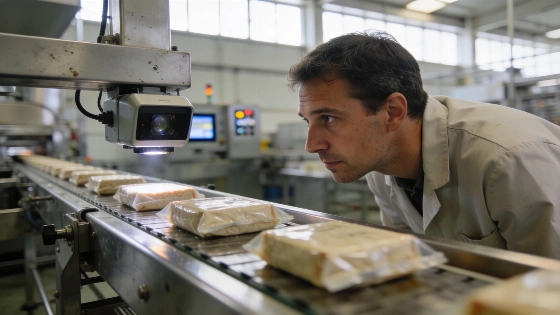
Much of the fair will focus on automated inspection and connected production. Exhibitors will show cold high-pressure processing that can extend shelf life without preservatives. Other systems use artificial vision to find contaminants on production lines. Sensors will target waste and water use.
One technology shows the direction.
Antares Vision Group will present two systems that link machine vision with food safety checks. Its LDS IoT CO2 system detects leaks in modified-atmosphere packaging and inspects the full output without slowing the line. The system is intended for ready-to-eat salads, grated cheese, prepared meals and fresh snacks. A small leak can shorten shelf life in each case. Antares Vision Group says the exhibition will focus directly on packaging-leak detection and food-safety inspection.
According to Dairy Foods, Antares Vision’s wider portfolio includes integrated inspection and quality-control systems that can check closures and fill levels. These tools are designed not only to identify defects but also to reduce container losses across the supply chain, placing the exhibition systems within a broader industrial quality strategy.
The company's IE4000 PLUS checks labels on jars, bottles and other containers through automatic 3D reconstruction and 360-degree inspection. It checks the label's presence, position and condition. It also reads codes, batches and expiry dates. Antares Vision Group has been part of Crane NXT since April 2026.
That gives artificial intelligence a clear job. It can find a defect early, stop a faulty batch from moving ahead and give operators more information. Ricardo Márquez, director of the salon, says automation, artificial intelligence and data analysis are the technologies advancing fastest as factories seek greater flexibility.
The pressure goes beyond machinery. Food producers must respond to changing preferences, intolerances and ethical choices while cutting their environmental impact. Márquez points to digital twins, connected processes and better traceability. These tools can help plants use raw materials more efficiently, reduce bottlenecks and automate repetitive work.
The FoodTech Innovarena will anchor the technical programme. More than 140 national and international experts are scheduled to join over 60 talks, round tables and events. Artificial intelligence and food safety will be among the main subjects, according to Efeagro.
Safety will extend beyond the factory gates.
The programme includes the second AECOC Shopperview Barometer. It will examine how households handle, store and prepare food. Other sessions will address microbiological risks. The pairing connects factory design with the behaviour of the final consumer.
Spain's startup ecosystem will also get direct access to industrial buyers. Thirty-eight food technology startups from across the country are due to present projects involving artificial intelligence, alternative proteins, sustainability, new packaging materials and the recovery of by-products. The FoodTech Awards Innova and Emprende have already been presented. The new FoodTech Award al Mérito Científico 2026 will recognise advanced technologies and ingredients for food production.
For founders, the value of Alimentaria FoodTech 2026 lies in the number of potential customers and partners in one place. Artificial vision for contaminant detection will be one area to watch. Connected sensors that reduce waste and water use will be another. Digital twins for factories will draw attention too.
The international buyer programme adds a route to food and beverage companies across Europe, Africa and Latin America. The commercial test is direct.
The contrast with Madrid's street-level housing pressure is sharp: the earlier trade fair showed how Spanish industry events can connect technical projects with investment and commercial decisions.
Alimentaria FoodTech 2026 will put equipment, startups, buyers and factory-ready inspection systems in the same setting. Its exhibitor count and international programme give the fair a clear commercial purpose. Food manufacturers are looking for systems that protect products, trace production and lower avoidable costs. Artificial intelligence will have to prove its value on the line.