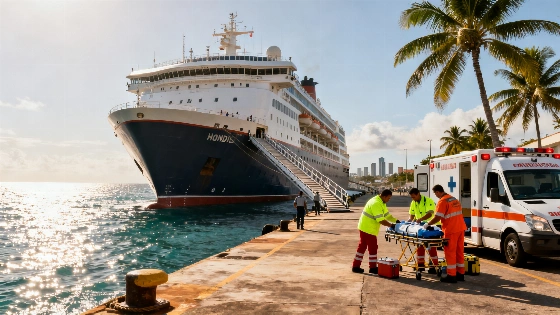
Hantavirus Outbreak on MV Hondius Cruise Ship: Three Dead, Emergency Measures En Route to the Canaries. An outbreak of hantavirus has been reported on the MV Hondius cruise ship en route to the Canary Islands: three passengers have died and another is in critical condition. Spanish and EU authorities are coordinating emergency measures to prevent the spread of the infection among more than 150 passengers from various countries.
The cruise ship MV Hondius, sailing under the Dutch flag to the Canary Islands, has become the center of an international epidemiological crisis: a hantavirus outbreak has been detected on board, already resulting in three deaths and one person hospitalized in serious condition.
Key facts
The vessel is anchored near the port of Praia (Cape Verde) following the detection of the infection. European and Spanish authorities are urgently assessing the situation: some passengers may be evacuated, while others will continue to the Canaries for medical monitoring. A decision regarding the port of arrival and further actions has not yet been made.
Why it matters
The incident affects not only the passengers and crew of MV Hondius, but the entire international cruise industry. The Canary Islands are a key hub for cruise tourism, and an outbreak of infection on such a route may impact trust in the sector as well as approaches to health control in European ports.
Context
There are about 150 people on board, including citizens of the US, UK, Spain, the Netherlands, and other countries. The ship has already made stops on Atlantic islands, complicating the tracking of possible contacts. Hantavirus outbreaks are rare on maritime transport, but their incubation period may last several weeks, making timely identification of new cases difficult.
Who is affected
- Passengers and crew of the MV Hondius—direct risk of infection and mobility restrictions.
- The authorities of Spain, the EU, and the countries of the passengers' citizenship — the need for coordination of sanitary measures and possible repatriation.
- The tourism and cruise market — potential decrease in demand and tighter sanitary protocols.
What could change
- Introduction of new sanitary requirements for cruise ships on routes to the Canaries and other European ports.
- Stricter monitoring of the health of passengers and crew before and after the voyage.
- Temporary reduction in the number of cruise ship calls at the region's ports.
What is still unknown
- The exact source of infection on board the MV Hondius.
- Whether a decision will be made for a full evacuation of the vessel or quarantine on board.
- How many more passengers could have been infected — the incubation period of hantavirus could result in new cases appearing after arrival at port.
- Which port in the Canary Islands will receive the ship and what measures will be applied to passengers upon arrival.
How not to misinterpret
- The hantavirus outbreak on the MV Hondius is rare but not unprecedented for maritime transport: it is not advisable to extrapolate the situation to the entire industry without further data.
- There is currently no confirmation of the infection spreading beyond the vessel or among residents of the ports where the MV Hondius stopped.
- Decisions on quarantine, evacuation, and restrictions are made based on recommendations from international bodies, not just national authorities.
Conclusion
The hantavirus outbreak on the MV Hondius has presented a serious challenge for the cruise industry and public health services in Europe. The ultimate impact on passengers, ports, and the tourism market will depend on how effectively countries coordinate and how quickly they respond to new cases. In the coming days, a key question will be whether the infection can be contained before the vessel arrives in Europe.