The Opel Corsa’s arrival in 1982 marked a turning point for Spain’s car industry. Built in Zaragoza, it quickly became a symbol of mobility and innovation, shaping the country’s automotive landscape for decades.
When the first Opel Corsa rolled off the production line in Figueruelas, Zaragoza, in 1982, it was more than just a new model for the German brand. It was the start of a transformation in Spain’s automotive sector, bringing a compact, modern car to a market hungry for accessible mobility. At the time, Opel had no presence in the fast-growing small car segment, while rivals like the Ford Fiesta and Volkswagen Polo were already making waves across Europe.
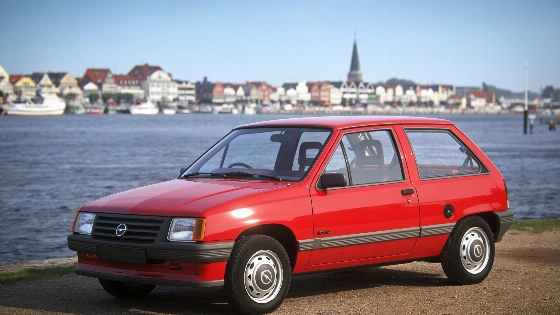
The Corsa project, initially known as the S-car, was closely tied to the creation of the Figueruelas plant. General Motors invested in this new Spanish facility specifically to produce the Corsa, a move that would anchor the model’s identity to Spain for decades. Designed by Erhard Schnell, who also shaped the Opel GT, the Corsa A stood out with its sharp lines and rally-inspired wheel arches, giving it a distinctive, youthful look.
The Corsa transformed Figueruelas from a small Spanish town into one of Europe's most important automotive manufacturing hubs.
Engineering for a New Era
Measuring just 3.62 meters in length, the original Corsa was engineered for efficiency and agility. Its aerodynamic coefficient of 0.36 was impressive for the era, reflecting a focus on modernity and practicality. The initial lineup offered both a three-door hatchback and a two-door sedan (the Corsa TR), with four- and five-door versions joining the range by 1985. This flexibility helped the Corsa appeal to a wide range of European drivers.
Under the hood, the first generation featured a series of four-cylinder petrol engines, starting with a basic 1.0-liter carbureted unit producing 45 hp. More powerful options included a 1.2-liter (55 hp) and a 1.3-liter (70 hp), the latter quickly becoming a favorite for its balance of performance and economy. Most versions came with a four-speed manual gearbox, though some offered a fifth gear for improved efficiency.
Expanding the Range
While petrol engines dominated the early lineup, diesel options soon appeared. In 1987, Opel introduced a 1.5-liter diesel engine sourced from Isuzu, delivering 50 hp, followed by a 67 hp turbodiesel variant a year later. As the decade progressed, the Corsa’s engine range evolved to meet new standards, with the 1.3-liter unit upgraded to 60 and 75 hp versions, and a new 1.4-liter engine with fuel injection pushing output to 82 hp. A 1.6-liter engine would later serve as the foundation for the model’s sportiest variant.
The Rise of the Corsa GSi
The arrival of the Opel Corsa GSi in 1988 marked a turning point for the model’s image. Building on earlier sporty versions like the Corsa SR and GT, the GSi featured a 1.6-liter fuel-injected engine producing 100 hp in a car weighing just 820 kg. This combination of lightness and power made the GSi a genuine contender among Europe’s hot hatchbacks, with upgraded suspension, brakes, and distinctive styling touches setting it apart from the rest of the range.
Special editions also played a role in the Corsa’s appeal. The Corsa Swing offered affordability, while the Steffi Special celebrated tennis star Steffi Graf’s achievements. The rare Corsa Spider, developed with Irmscher, transformed the hatchback into a four-seat convertible, and other collaborations produced unique variants like the Sprint C and Sprint DR.
Evolution and Legacy
In 1990, the Corsa A received a significant update, with redesigned headlights, grille, bumpers, and a refreshed interior. The engine lineup continued to modernize, introducing fuel injection and catalytic converters to meet new regulations. By the time production ended in 1993, more than 3.1 million units had been built, cementing the Corsa’s place in the European B-segment and establishing Figueruelas as a key manufacturing hub.
Today, the Opel Corsa remains a central figure in Spain’s automotive story. The model has evolved through six generations, adapting to new technologies and market demands. Its legacy is visible not only in the millions of cars sold, but also in the continued importance of Spanish manufacturing for the brand. As the industry shifts toward electrification, the Corsa’s journey from a bold newcomer to a national mainstay offers a clear example of how a single model can shape a country’s roads and identity.
Recent developments in Spain’s car industry, such as Porsche’s commitment to electric sports cars and potential collaborations with other brands, highlight the ongoing transformation of the sector. For more on how leading manufacturers are adapting to new challenges, see this analysis of Porsche’s electric strategy and its impact on the market.