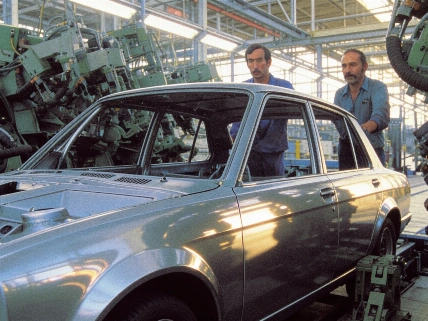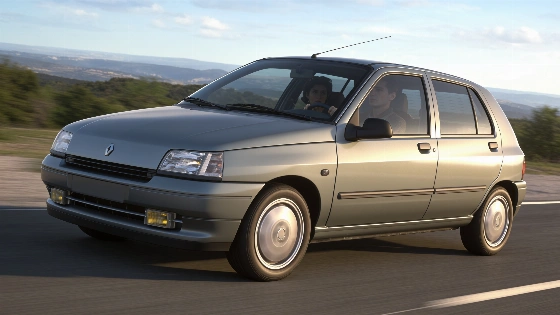
When Renault retired the iconic R5, few expected its successor to become a symbol of Spanish mobility. The Renault Clio not only met expectations but set new standards for small cars, shaping the way Spain moved through the 1990s and beyond.
In 1990, Renault unveiled the Clio at the Paris Motor Show, marking a pivotal moment for the brand and for drivers across Spain. The challenge was formidable: replace the Renault 5, a model that had defined an entire generation since its debut in 1972 and sold over 5.5 million units worldwide. The Clio, however, quickly proved it was more than just a successor—it was a leap forward in design, comfort, and ambition.
The Renault 5 had already evolved once, becoming the Supercinco in 1984, but by the late 1980s, competition and changing expectations forced Renault to rethink its approach. The result was the X57 project, which aimed to elevate the segment B compact car with more space, better quality, and advanced features. The decision to break with Renault’s numeric naming tradition and christen the new model 'Clio'—inspired by Greek mythology—signaled a fresh start.
Design and Innovation
Early prototypes of the Clio appeared in 1988, hinting at a more modern, aerodynamic silhouette. When the production model arrived, it offered both three- and five-door versions, measuring a compact 3.7 meters in length. Drawing on lessons from the Renault 19, engineers improved aerodynamics, interior space, and driving dynamics, setting new benchmarks for the class.
Under the hood, the first-generation Clio featured a broad range of engines. Entry-level petrol options included 1.1, 1.2, and 1.4-liter units, with outputs from under 50 to 80 horsepower. For those seeking more, a 1.7-liter engine delivered 92 horsepower, while a 1.9-liter diesel prioritized efficiency and durability, achieving less than 6 liters per 100 km in combined consumption. Manual five-speed gearboxes were standard, but select versions offered automatic transmissions—a rarity in the segment at the time.
Expanding the Range
Renault structured the Clio lineup with RL, RN, and RT trims, but quickly recognized the model’s broader potential. In 1991, the Clio Baccara arrived, introducing luxury features like leather upholstery, wood accents, and air conditioning—amenities uncommon in small cars. The Clio S, meanwhile, offered a sportier look with a 1.4-liter engine, paving the way for true performance variants.
That same year, Renault launched the Clio 16V, designed to fill the gap left by the Renault 5 GT Turbo. Powered by a 1.8-liter, 16-valve engine derived from the Renault 19 16V, it produced up to 140 horsepower (137 with a catalytic converter), sprinting from 0 to 100 km/h in 8 seconds and reaching 209 km/h. The 16V stood out with flared wheel arches, a distinctive hood intake, and upgraded suspension and brakes.
The Clio Williams Legend
In 1993, Renault introduced the Clio Williams, a model that would become a cult favorite among enthusiasts. Although its name referenced the Williams Formula 1 team, the car was developed independently by Renault Sport. The Williams swapped in a 2.0-liter, naturally aspirated four-cylinder engine producing 150 horsepower, enabling a top speed of 215 km/h and 0 to 100 km/h in just 7.8 seconds. Its combination of light weight, manual transmission, and front-wheel drive made it a benchmark for hot hatches of the era.
Throughout its production run until 1998, the first-generation Clio continued to evolve, adding features like power steering, ABS, air conditioning, central locking, and electric windows and mirrors in higher trims. The model’s adaptability and innovation helped cement its place as a cornerstone of Renault’s lineup and a familiar sight on Spanish roads.
Legacy and Context
The Renault Clio’s impact extended far beyond its initial launch. Its success demonstrated that small cars could offer comfort, safety, and even luxury, influencing competitors and reshaping expectations for the segment. The Clio’s story also reflects broader trends in European automotive design, where compact models became increasingly sophisticated and versatile. For comparison, the evolution of family-friendly electric SUVs like the Peugeot e-5008, recently reviewed for its power and practicality, shows how the market continues to adapt to new demands—a trend that began with models like the Clio.
Today, the Clio remains a key part of Renault’s identity, now in its sixth generation. Its journey from a bold replacement for the R5 to a symbol of everyday mobility in Spain highlights how a single model can redefine what drivers expect from their cars—and how innovation in the compact segment can leave a lasting mark on a nation’s roads.