In Ayamonte, driver arrested for transporting 35 grams of cocaine after seizure at the wheel. In Ayamonte, police arrested a man after he fell ill behind the wheel. During a search, officers found 35 grams of cocaine in his possession. The incident began with a medical emergency call but ended with a criminal case.
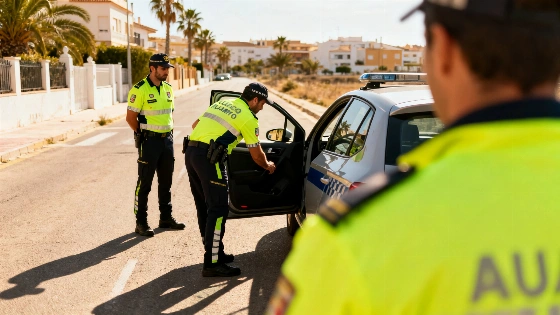
In Ayamonte (province of Huelva), a routine call to assist a driver ended with an arrest on suspicion of drug trafficking. According to local police, the incident occurred on Wednesday when the dispatcher received a report about a man who began convulsively shaking at the wheel of his car. Police officers and emergency services arrived at the scene.
Initially, the police focused on providing medical assistance. However, during the examination, it became clear that the driver was under the influence of illegal substances. The man was then asked to show his documents, after which both the car and his personal belongings were searched.
During the search, officers found 35 grams of cocaine on the man, packaged for further distribution. Police detained him as a suspect in committing a crime against public health. The department clarified that they had not initially suspected any potential law violation — the situation changed only after signs of drug use were detected.
Cases where a routine check or assistance call leads to the uncovering of more serious crimes are not uncommon for Spanish law enforcement. For example, foreign police officers were previously detained in Barcelona, becoming subjects of a criminal case after an incident in a taxi — more details can be found in the article about the arrest of Canadian police officers in the city center.
Under Spanish law, possession and distribution of cocaine are classified as serious crimes against public health. In recent years, police have strengthened control over drug trafficking, particularly in regions where such incidents are on the rise. Ayamonte, located on the border with Portugal, is considered one of the areas where law enforcement regularly conducts checks on roads and in residential neighborhoods. In such cases, detainees face not only criminal prosecution but also lengthy prison sentences.