Hydrogen-powered cars are falling behind in Europe, with annual sales dwarfed by a single month of Tesla Model 3 registrations in Spain. High costs, poor infrastructure, and energy inefficiency are pushing buyers toward battery electric vehicles.
In 2025, hydrogen fuel cell cars barely made a dent in Europe. Only 566 were sold across the entire continent. That’s less than a quarter of the Tesla Model 3s registered in Spain in just one month. The gap is huge. SNE Research reports that global hydrogen car sales hit 16,011, but Europe’s numbers dropped 23.1% from the year before. The trend is clear for anyone watching clean transport.
Still, carmakers keep hydrogen in the conversation. Hyundai rolled out its second-generation Nexo in Spain. Toyota sticks with the Mirai. BMW is getting ready for its first hydrogen production car. Each launch sparks the same question: batteries or hydrogen? For regular drivers, the answer is in the numbers. Independent industry reviews confirm that the Toyota Mirai is one of the only hydrogen passenger cars built in series, and it’s the sole mass-market hydrogen model in the US for 2026. Hyundai calls the new Nexo its flagship hydrogen SUV. But sector analysts point to the tiny market and the ongoing lack of refueling stations as the main reasons buyers stay away.
Daimler Truck is focusing its hydrogen efforts on heavy-duty vehicles, with the first small-series Mercedes-Benz NextGenH2 fuel-cell trucks expected to enter customer operation by the end of 2026.
The physics problem
Hydrogen cars are electric at heart. The difference is how they get their power. Instead of plugging in, they make electricity on board by mixing hydrogen and oxygen. But this process wastes a lot of energy. Modern PEM electrolyzers use about 55.2 kWh of electricity to make one kilogram of hydrogen. That kilogram only holds 33.3 kWh of usable energy. Nearly 40% of the energy is lost before the hydrogen even gets to the car.
Storing the gas at 700 bar takes another 3.1 kWh per kilogram. The fuel cell itself runs at about 64.7% efficiency in city driving, as measured in the Toyota Mirai. The bottom line: a Hyundai Nexo needs about 47 kWh of electricity at the source to go 100 kilometers. That doesn’t even count losses from transport or aging equipment. Compare that to the Hyundai IONIQ 5, a similar-sized electric SUV. It uses just 16 to 17.2 kWh per 100 kilometers, measured at the plug. With the same electricity the Nexo needs for 100 kilometers, the IONIQ 5 can go over 270 kilometers. That’s a big difference.
Cost and practicality
The price gap is just as wide. In Spain, the Nexo starts at about 71,000 euros. The IONIQ 5 starts at 47,500 euros. That’s more than 23,000 euros extra for two SUVs from the same brand. The Toyota Mirai costs even more, starting at 74,200 euros. Running costs don’t help. Hydrogen sells for about 13 euros per kilogram in Germany. That means the Nexo costs 10.5 euros in energy for every 100 kilometers. The IONIQ 5, charged at home at 0.15 €/kWh, costs just 2.6 euros for the same trip. Over 15,000 kilometers a year, the hydrogen car racks up nearly 1,200 euros more in energy alone. That adds up fast.
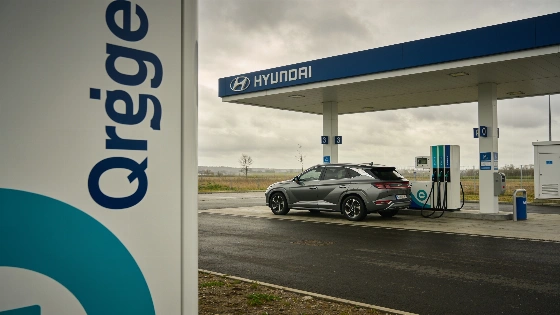
Infrastructure is a major problem. At the start of 2025, Spain had only two public hydrogen stations. Only one was open without an appointment. Most of the country’s 13 stations serve private fleets. Even in Germany and California, networks are shrinking or often out of service. Denmark’s public hydrogen refueling has almost disappeared. Toyota’s idea for portable hydrogen cartridges is still just a concept. Sector publications keep naming the lack of public refueling as the main reason hydrogen cars aren’t catching on, even as new models appear.
European institutional assessments remain cautious: the European Court of Auditors concluded in 2024 that the EU is unlikely to meet its hydrogen targets, and the ACER regulator recorded only minimal deployment of electrolyzers compared to interim benchmarks.
Complexity and durability
Hydrogen cars aren’t just pricey. They’re complicated. Besides the electric motor, inverter, and a small battery, they need a fuel cell stack, high-pressure carbon fiber tanks, and extra systems to keep everything running. The Nexo has three tanks that hold 6.69 kg of hydrogen at 700 bar. The fuel cell uses platinum as a catalyst—0.175 grams per kW in the Mirai, which is over three times more than a Euro 6 gasoline catalyst. These tanks have a legal shelf life. Toyota’s Mirai manual says they must be replaced every 15 years. Lithium-ion batteries, on the other hand, lose capacity over time but don’t have a legal expiration date.
Fans of hydrogen talk about five-minute refueling and long range. But those perks mean little without working stations. Battery electric cars are catching up on charging speed. In Spain, a Denza Z9GT charged from 10% to 97% in under nine minutes at a BYD megacharger. Most electric car owners just plug in at home or work. They spend less time “refueling” than it takes to connect the cable. It’s simple.
The market’s verdict
Sales numbers back up the physics and the costs. Global hydrogen car sales have dropped since 2022. The small bump in 2025 came almost entirely from Hyundai’s Nexo in South Korea and pilot projects in China. Elsewhere, sales are falling fast. Japan sold just 430 units. North America managed 365. Toyota’s global hydrogen sales fell 39% in 2025, barely passing a thousand cars. In the first half of 2026, Hyundai made up seven out of every ten hydrogen cars sold worldwide. That’s dominance in a shrinking field.
Carmakers are pulling back. Stellantis dropped its hydrogen van program in July 2025, writing off 1.1 billion euros. Even Toyota’s tech chief admitted in 2023 that the Mirai hadn’t worked out, shifting focus to commercial vehicles. Now, the hydrogen car market is basically Hyundai’s—and mostly in South Korea. The rest are stepping away.
Heavy transport and industry
Hydrogen’s last real use is in heavy transport. For 40-ton trucks driving 800 to 1,000 kilometers a day, battery weight cuts into cargo, and fast refueling matters. But even here, battery trucks are moving in. In 2025, Europe registered nearly 24,000 electric trucks and buses, up 60% from the year before. Mercedes sold 1,400 zero-emission heavy trucks in just six months. Daimler Truck delayed mass production of its hydrogen model. Nikola went bankrupt. The shift is clear.
Hydrogen makes the most sense far from the road. It can replace “grey” hydrogen in refineries and fertilizer plants, help decarbonize steel, or serve as a base for synthetic fuels in shipping and aviation—places where batteries can’t do the job. Each kilogram of green hydrogen cuts more emissions in industry than in a passenger SUV. That’s where it counts.
Why persist?
So why do Toyota, Hyundai, and BMW keep pushing hydrogen cars? The answer is policy, regulation, and money already spent. Toyota’s long bet on fuel cells fits with Japan’s energy plan, but even Toyota is now turning to battery models and commercial deals. Hyundai’s push is backed by South Korea’s 2019 roadmap, which aims for 6.2 million hydrogen vehicles by 2040 and 1,200 fueling stations, with big subsidies driving local sales. BMW is practical: its hydrogen car for 2028 will share a platform with gasoline, diesel, plug-in hybrid, and electric models. It’s funded by 191 million euros from the German government and 82 million from Bavaria. BMW admits it needs hydrogen to match diesel prices at the pump before it can work. That’s not happening yet.
Regulatory quirks matter too. EU CO2 rules count fuel cell cars as zero-emission at the tailpipe. That makes them a hedge for carmakers against future policy changes. But for buyers, the math is simple. Pay over 23,000 euros more for a Nexo instead of an IONIQ 5. Use nearly three times more electricity per kilometer. Rely on a handful of public stations. Until those numbers change, hydrogen cars will stay as tech demos, not real options.
As reported earlier, regulatory changes in big markets can flip the script overnight. But the numbers from Europe’s hydrogen car market are clear. For now, batteries have won on the road. Hydrogen’s future is somewhere else.