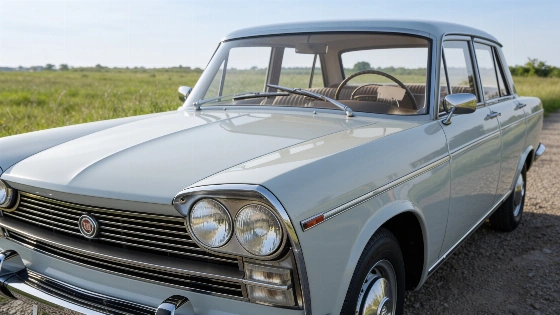
The SEAT 2000-D became the backbone of Madrid’s taxi fleet. Its Mercedes-Benz diesel engine and tough build set a new standard for Spanish city drivers.
Madrid’s streets once echoed with the sound of the SEAT 2000-D. The diesel clatter and the smell of cold gasóleo filled taxi ranks across the city. For many, this car became part of daily life. Passengers and drivers still remember it.
The 2000-D was different from the start. Most Spanish drivers saw diesel engines as odd or only for work vehicles. Then SEAT brought out the 2000-D with a Mercedes OM-615 engine. This happened because ENMASA, the Spanish company licensed to build Mercedes-Benz engines, teamed up with SEAT through CISPALSA. Suddenly, Spanish buyers could get a sedan with German diesel power. Only Barreiros, with its Dodge cars, tried to compete.
SEAT was officially established in 1950, and its first car rolled off the assembly line in 1953, marking the beginning of Spain's postwar automotive industry.
The jump from the old 1800-D to the 2000-D was big. SEAT engineers did more than just swap engines. They rebuilt the 1500’s chassis to handle the heavier diesel. The front axle got stronger. They moved the engine and gearbox mounts, shortened the driveshaft, and tweaked the steering. The new engine added 40 kilos to the front. On paper, the car made 55 DIN horsepower at 4,200 rpm and 11.5 mkg of torque at 2,400 rpm. On the road, it felt stronger than the numbers suggested. Gasoline rivals could not keep up with its stamina.
The 2000-D’s long gear ratios shaped how it drove. In city traffic, drivers shifted between second and third gear often. Out on the highway, the car cruised near 100 km/h without passing 4,000 rpm. Fourth gear was set at 29.5 km/h per 1,000 rpm. This made it perfect for taxi work in Madrid. Speed was not the goal. Endurance was.
Brakes were another surprise. The 2000-D had four-wheel disc brakes, boosted by the engine’s own system. Old magazines like Velocidad praised its stopping power. The brakes worked better than most drivers needed, since the car rarely went over 130 km/h. But the extra weight up front made the rear axle more jumpy on rough roads. Drivers learned to handle it. They had no choice.
According to official information from EMT Madrid, the city has shown a sustained interest in preserving its transport heritage, including the restoration of historic vehicles like classic taxis. This reflects a broader cultural memory in Madrid, where iconic cars such as the SEAT 2000-D are celebrated as part of the urban landscape.
Fuel savings sold the car. The truth was less perfect. The 2000-D used between nine and twelve liters per 100 kilometers, depending on how it was driven. That was more than the diesel legend promised, but still better than most gas cars. The factory price was about 200,000 pesetas. That was 65,000 more than the gasoline 1500. For taxi drivers, the math was simple. The 2000-D’s tough engine and low running costs made it the smart pick for anyone driving all day.
This mix of strength and thrift made the SEAT 2000-D a fixture in Madrid’s taxi trade. It became as common as the city’s monuments. Its reputation for reliability matched stories of other Spanish car businesses that thrived by focusing on quality, not just numbers, as reported earlier.
The SEAT 2000-D marked a practical era in Spanish motoring. Technical partnerships and tough engineering shaped the cars that filled city streets. The 2000-D did more than just run well. It brought together Spanish manufacturing and German standards. It set a new bar for working cars in Spain. For anyone who rode in a Madrid taxi back then, the 2000-D is part of the city’s story. Some cars just keep going. This was one of them.