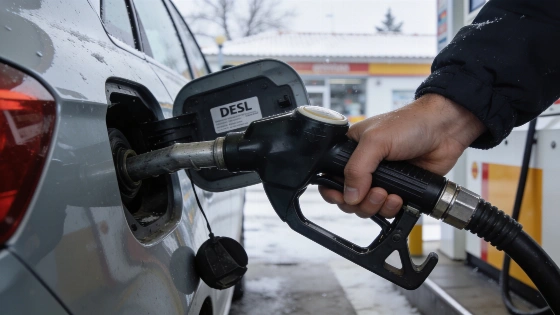
Spain's winter-grade diesel must meet a cold-filter plugging point (CFPP) of -10°C between 1 October and 31 March. CFPP is a laboratory measure of the temperature at which fuel can no longer pass through a standardised filter because wax crystals have formed. Drivers who use their cars infrequently should fill up before severe cold sets in, as summer fuel may still be in the tank.
Seasonal diesel limits vary between countries. Under Poland’s Regulation of the Minister of Climate and Environment of 26 June 2024, standard diesel has a CFPP limit of 0°C in summer, -10°C in transitional periods and -20°C in winter; the winter grade applies from 16 November to the end of February. The regulation also sets a -32°C limit for a separate diesel category with improved low-temperature properties.
Diesel contains naturally occurring paraffin wax. As fuel cools, the wax can form crystals that build up in the filter and restrict fuel flow. The engine may become difficult to start, stall or lose power. Summer diesel can begin forming paraffin crystals at around 0°C. Winter fuel contains additives that improve low-temperature operability. If crystals form, they can block the fuel filter, stopping the engine from starting or causing it to stall while driving.
The seasonal CFPP limit does not mean crystal formation is impossible above -10°C. In particularly cold or mountainous areas, crystals may begin forming before the filter is completely blocked. This is a fuel issue rather than a vehicle-equipment rule; a separate EU requirement for new cars concerns an alcohol-interlock interface.
If frost is forecast, avoid letting the tank run close to empty. Refuelling with winter diesel dilutes any summer fuel left inside, so there is no need to drain the tank first. Sprague Energy’s cold-weather diesel guidance recommends preparing fuel before the lowest temperatures arrive and checking or replacing fuel filters as needed. It also advises monitoring water separators and draining them when necessary. Keeping the fuel filter and supply system in good condition matters particularly when a car spends long periods parked.
Do not add petrol to diesel to improve its cold-weather performance. It can damage the injection system in modern diesel engines and should be used only if the manufacturer explicitly advises it for that model.
If paraffin has solidified and the car will not start, move it to a warm garage and let the fuel thaw naturally. Avoid intense heat sources such as hot-air blowers or hairdryers, which can cause a fire or damage components. If the symptoms remain after thawing, have a workshop check the filter and fuel system.