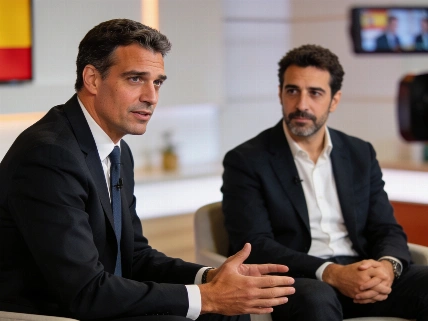
Equipo Económico submits two reports to court challenging Mossos and tax agency accusations. The firm Equipo Económico, founded by former minister Montoro, has submitted two expert reports to the court. They cast doubt on the accusations brought by the Mossos d’Esquadra and the tax authorities. The case involves large sums of money and suspicions of corruption.
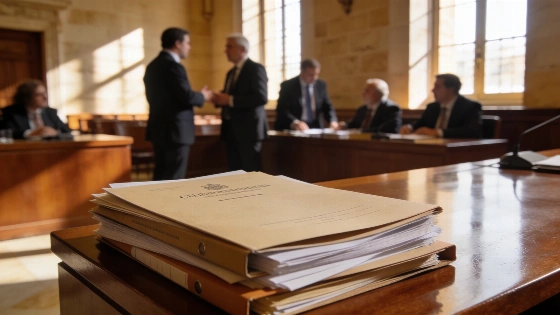
In the case of the alleged corruption scheme involving Equipo Económico, founded by former Finance Minister Cristóbal Montoro, the defense has submitted two new expert reports to the court in Tarragona. These documents, prepared by lawyer Juan Manuel Herrero de Egaña, cast doubt on the conclusions of the Mossos d’Esquadra and the Tax Agency, which formed the basis of the charges against the firm and its partners. According to EL PAÍS, the experts argue that the investigation made significant errors in interpreting the case files and relied on false assumptions.
Defense Arguments
The submitted reports state that Equipo Económico’s actions (now Global Afteli) showed no signs of influencing government decisions during the period when Montoro headed the Finance Ministry. As evidence, the defense provided more than 3,500 internal documents, including correspondence between employees and clients, which had not previously been included in the case. The experts insist that none of these documents confirm any contact between the firm and the ministry, and thus the assumption of a corrupt motivation for the payments does not stand up to scrutiny.
Criticism of the Investigation
Expert opinions indicate that the charges are based on a partial analysis of the facts and overlook significant details. In particular, the tax authority's report cites a sum of €35.5 million received by the firm from clients between 2008 and 2013. However, according to the defense, the investigation failed to consider that these funds were related to actual legal and consulting services, not attempts to influence legislation. The conclusions emphasize that none of the disputed reforms, including changes to the economic activity tax, were challenged or repealed after their adoption, which, according to experts, indicates the legitimacy of these changes.
Investigation progress
The Equipo Económico case remains one of the most high-profile corruption proceedings in recent years. Among the accused are Montoro himself and 27 others, charged with bribery, fraud, abuse of office, influence peddling, and forgery. Previously, the defense sought to have the case dismissed by challenging the prolonged confidentiality regime, requesting a change of jurisdiction, and seeking to invalidate a key email seized during another investigation. According to EL PAÍS, about 50 complaints have been filed with the Tarragona Provincial Court alone, none of which have yet been resolved.
Context and parallels
The legal proceedings surrounding Equipo Económico have drawn attention to the practices of major consulting firms in their dealings with government bodies. The case materials include requests for banking transactions of Montoro, his relatives, and affiliated companies for the period since 2006. Expert reports note that the firm was indeed engaged in analysis and preparation of regulatory proposals, as well as coordinating work with Ernst and Young, which, according to the defense, fully explains the received sums.
Cases like this cause widespread public resonance in Spain. For example, a court in Valencia recently closed a case against a judge following a blogger's complaint—a decision that also sparked discussion in legal circles (details on the court's decision in Valencia).