Italy has placed a major order for the Ineos Grenadier, marking a shift in military vehicle strategy. Austria follows with a contract for armored versions, while other NATO countries watch closely. The Grenadier’s rugged design is now under scrutiny across Europe.
Italy has signed on for the Ineos Grenadier, a British-made 4x4 that’s built a following among off-road fans and now, military planners. This is the Grenadier’s first big NATO contract. It signals a shift in how European armies are thinking about ground vehicles built for tough conditions.
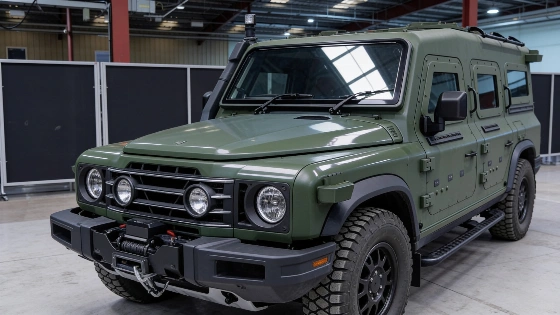
Austria is moving in the same direction. The Austrian government has ordered Grenadiers with extra armor, to be upgraded by Valentin Tusch GmbH, a company known for vehicle protection. These armored models will go to both defense and internal security units. The first deliveries and field tests are set for later this year.
According to official statements, the Italian Army and the Austrian government selected the Grenadier through separate competitive procurement processes, making these the first confirmed contracts for the vehicle with sovereign armed forces in Europe.
The Grenadier stands out for its old-school, no-nonsense engineering. It uses a ladder-frame chassis, solid axles, and permanent four-wheel drive. Ineos built it for people who think modern SUVs have lost their edge. The simple design and low parts count aren’t just for nostalgia. They make repairs and maintenance easier in the field, which can decide whether a mission succeeds or fails.
Ineos Automotive and its regional distributor ATflow have kept quiet about how many vehicles are in the deal or what the contracts are worth. What is clear: Italy will start getting Grenadiers in early 2027. Austria’s armored versions will arrive even sooner.
Both countries picked the Grenadier after open tenders. They wanted a platform that could handle different roles and rough terrain. The Grenadier’s flexible body styles, wheelbase options, and heavy load capacity made it the top pick for long-term military use. Italy is now the first NATO country to commit to the Grenadier at this level. That could push other armies to rethink their own vehicle choices.
While the Italian order is notable for its scale, neither the number of vehicles nor the contract value has been publicly disclosed by Ineos or Italian officials. Deliveries to the Italian Army are scheduled to begin in early 2027 via regional distributor ATflow, whereas Austria expects its first modified Grenadiers before the end of 2026. These contracts mark the first publicly announced agreements between Ineos Automotive and national armed forces, as previously the company had only participated in selection processes for the UK Ministry of Defence.
The Grenadier is drawing attention beyond Italy and Austria. Ineos Automotive is already in talks with other European and NATO militaries. The vehicle has made the shortlist for the British Ministry of Defence’s Light Mobility Vehicle program. Team Grenadier, led by Ineos, has reached the testing stage and is now in the running to supply the UK’s next light military vehicle.
Outside the military, the Grenadier is already working with police, border patrol, rescue teams, and special forces across Europe. Units in Germany, France, Spain, Hungary, Poland, the Czech Republic, Serbia, and Slovakia have put the vehicle to use for tactical missions, anti-terror work, and border security. The Spanish National Police have also added Grenadiers to their fleet, showing how the model is spreading in public safety roles.
Italy and Austria may be making headlines with their defense deals, but the Grenadier’s reach is growing steadily. As reported earlier, the European vehicle market is shifting, with new players and changing priorities shaking up the old order. The Grenadier’s success in military and security circles shows that buyers are looking for vehicles that put reliability and toughness ahead of luxury or digital extras.
This isn’t just about longing for classic 4x4s. It’s a practical call by armed forces and security agencies. They need vehicles that can take a beating, run for long stretches in unpredictable conditions, and get fixed quickly without special tools. The Grenadier’s fast adoption by so many agencies points to a clear trend: right now, simplicity and strength are beating out complexity and comfort. As more NATO countries weigh their options, the Grenadier’s progress will show where European defense mobility is headed next.