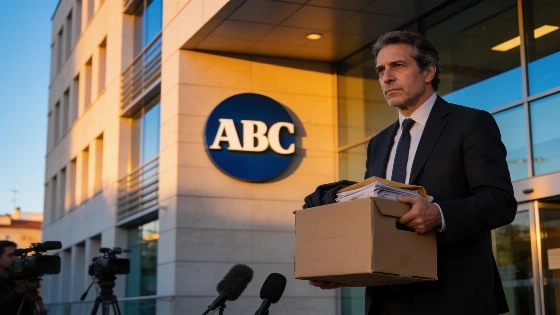
Javier Chicote has been dismissed from 'ABC' after a management decision. The journalist revealed he was let go during a new editorial phase. His exit has sparked debate about the future of investigative reporting in Spain.
Javier Chicote, one of Spain’s most recognized investigative journalists, has been dismissed from the newspaper 'ABC' following a decision by the publication’s management to initiate a new editorial phase. The move, which was confirmed by Chicote himself during a live appearance on 'Todo es mentira', has generated significant attention within the Spanish media sector. Chicote stated that he had never previously been dismissed from any position, and described the process as abrupt, with his access to work systems cut off immediately after being informed.
According to Chicote, the director of 'ABC' called him into a meeting to communicate that the newspaper was entering a new stage and would be moving in a different direction, making his continued presence unnecessary. He emphasized that he had no intention of remaining where he was no longer wanted, and noted that he had felt increasingly sidelined within the organization for some time. Despite not being given specific reasons for his dismissal, Chicote indicated that he has his own suspicions about the underlying motives, though management cited only the end of an era as justification.
Chicote’s departure has prompted public reactions from colleagues and media figures, including Risto Mejide, who addressed the issue directly on air. Mejide highlighted the surprise and concern among many in the industry regarding the suddenness of the decision. The situation has also drawn comparisons to other recent controversies involving prominent journalists, such as the backlash faced by Claudio Savoia over remarks about the Malvinas War, as detailed in this related report on editorial disputes.
Despite the uncertainty surrounding his next steps, Chicote made clear that he intends to continue his career in investigative journalism. He mentioned that he has already begun receiving new professional offers and remains committed to the field he has dedicated his life to since earning his doctorate at age 25. Chicote also expressed gratitude for the outpouring of support he has received, noting that hundreds of messages from colleagues and readers have provided encouragement during this transition.
The case of Javier Chicote’s dismissal highlights ongoing tensions within Spanish media as editorial lines shift and established journalists face abrupt changes in their careers. In recent years, Spain’s press landscape has seen several high-profile departures and restructurings, reflecting broader industry challenges such as digital transformation, audience fragmentation, and evolving newsroom priorities. The future of investigative journalism in Spain remains a subject of debate, with many observers pointing to the need for robust reporting amid changing editorial strategies. Chicote’s experience underscores the precariousness of even the most established media careers in a rapidly evolving environment.