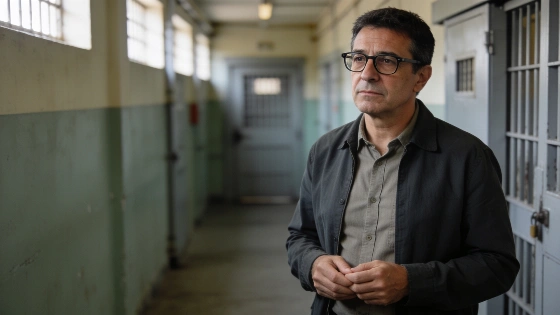
Jordi Sànchez, former head of the Assemblea Nacional Catalana, spent nearly four years in prison after the 1-O referendum. He describes the psychological toll, the support from Catalonia, and the challenges faced by his family.
Jordi Sànchez, once at the forefront of Catalonia’s independence movement as president of the Assemblea Nacional Catalana, has spoken out about the harsh realities he faced during his imprisonment following the events of the 1-O referendum. Arrested in October 2017 and held in preventive detention, Sànchez recalls entering Soto del Real prison in Madrid to immediate hostility, with fellow inmates recognizing him from constant television coverage and responding with insults and aggression. The initial tension only eased after he personally greeted each inmate, but the stigma of being labeled a 'golpista'—a coup plotter—remained a constant presence throughout his time behind bars.
Sànchez and Jordi Cuixart, then president of Òmnium Cultural, were detained as leaders of the mass protests on 20 September 2017, just days before the disputed independence vote. Sànchez spent three years and eight months in prison, most of it in provisional detention, which he describes as one of the most severe abuses of the Spanish penal system. He notes that the emotional strain of such detention often pushes inmates to consider pleading guilty simply to regain their freedom, regardless of the evidence.
Expectations of an early release were dashed for Sànchez in December 2017, when, despite rumors that civil society leaders might be freed, he learned from a television broadcast that he would remain in custody. He describes this moment as even more devastating than hearing his final sentence. Over time, Sànchez adapted to prison life, drawing on his previous experience visiting penitentiaries and mentally preparing himself for incarceration in the days following the 20-S protests. He deliberately avoided initiating political discussions, though both inmates and staff frequently sought his perspective, especially as his image remained omnipresent in the media.
Transferred to Lledoners prison in Barcelona before his trial, Sànchez found some relief in being closer to home, but the impact on his family was profound. His children, then aged 18, 16, and 10, endured years of separation, and his partner was thrust into an unwanted public role. Sànchez emphasizes that the pain of imprisonment is often greater for loved ones than for the inmate, with both sides trying to shield each other from distressing news. He only learned later of serious health issues affecting his parents during his incarceration.
Despite the adversity, Sànchez credits the overwhelming support from Catalan society and the sense of injustice he felt as sources of resilience. He says the experience forced him to put everyday problems into perspective and to develop a stronger emotional armor. After being convicted of sedition and sentenced to nine years, Sànchez was released in June 2021 following a government pardon. He has since returned to public service, now working as director of social rights at the Sindicatura de Greuges, and occasionally visits former fellow inmates at Lledoners to maintain connections and test his own emotional recovery.
The case of Jordi Sànchez highlights the broader tensions in Spain over the use of preventive detention and the legal response to the Catalan independence movement. The emotional and social costs of such high-profile prosecutions continue to be debated, especially as other legal cases in Spain, such as the recent acquittal of Antonio Arroyo over high-interest loans, draw attention to the complexities of the justice system. For more on the challenges faced by those entangled in Spain’s courts, see this report on a controversial Madrid lender’s acquittal.
In the years since his release, Sànchez has focused on integrating the lessons of his imprisonment into his personal and professional life. His story remains a reference point in ongoing discussions about justice, civil rights, and the legacy of the 1-O referendum in Catalonia and across Spain.