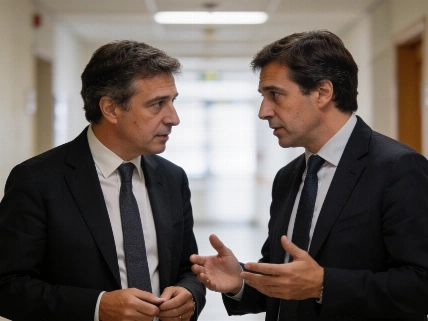
Pedro Sánchez answered a question in the corridors of Congress about the minors still living on the streets of Ceuta with a line directed at Juan Vivas: "Ask Vivas about that." Juan del Val saw no diplomatic tact in the remark, but a sign of the distance between the prime minister and Ceuta’s leader. The El Hormiguero contributor argues that Sánchez cannot stand seeing residents applaud Vivas while the city faces a migration crisis without a coordinated political response.
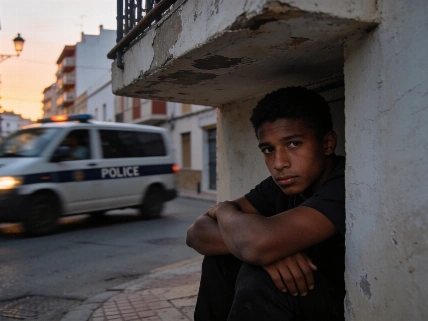
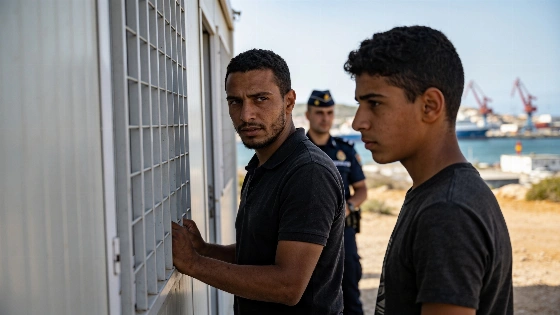
The scene followed a failed transfer at the port. The site had 1,700 places, but around 5,000 people tried to get in. Chaos followed, prompting the National Police and the Civil Guard to intervene. Around 2,000 migrants later returned to Trampolín and Benítez beaches after being left outside the camp.
Information from figures compiled in mid-September and cited by Reuters, more than 5,300 people had returned voluntarily to Morocco since August 10, while about 300 had been expelled through administrative procedures.
The issue goes beyond a television debate. Since late July, tens of thousands of people have crossed the border between Morocco and Spain irregularly. Nearly two months later, between 9,000 and 10,000 remained in Ceuta, information from government estimates. City authorities put the figure at about 13,000. Reuters also described a prolonged crisis and, in one estimate, said around 12,000 migrants remained connected to the city after the mass crossing in July.
The government opened new reception facilities, reinforced police deployments and moved hundreds of migrants from beaches and makeshift settlements. Ceuta remained overwhelmed, with tensions and clashes amid security problems.
On the programme, Pablo Motos and his colleagues challenged the prime minister’s decision to shift responsibility to Vivas. Nuria Roca interpreted the response as a sign that Sánchez was overwhelmed by the situation. Motos said the president of Ceuta was acting competently by denouncing an injustice, and accused the government of contributing to it.
Vivas says the identification of people arriving in the city falls to the Ministry of the Interior and the Government Delegation, while the autonomous city handles the reception and guardianship of minors. The National Court has also placed coordination of security for the operation under the Ministry of the Interior.
Del Val went further. In his view, a lack of empathy is part of Sánchez’s "essence." He added that the prime minister becomes more displeased when people publicly recognize another leader. The writer summed up that attitude in a phrase: "He can’t stand people applauding him." He also argued that the prime minister’s political circle has ended up blaming Vivas for the problem.
The debate also turned to comparisons between the two leaders. Del Val said Sánchez finds it very difficult to face people directly, while Vivas can walk through the city to applause. He described the contrast as plain to see and said the prime minister could not do the same.
Cristina Pardo focused on one specific fact: Sánchez and Vivas have not spoken since July 31. The prime minister visited Ceuta just once, when he called the mass crossing an attack. He has not spoken to the president of the autonomous city since then, according to the programme. The earlier Ceuta report also identified returns and migrants remaining in the city as basic issues in the crisis.
The pressure is also evident in child-protection services. Authorities reported that more than 2,000 minors were registered in Ceuta and that more than 1,800 initial screening procedures had taken place. A team of about 90 people identified minors and assessed their vulnerability while processing applications. Juan Vivas called Sánchez’s response "out of line" and said the city should not be assigned a responsibility that, in his account, belongs to the state.
The political dispute is tied to a concrete emergency. Thousands of people remain in a city unable to absorb the pressure. A transfer with too few places sent some of them back to the beaches, and Sánchez’s response turned a lack of coordination into a personal clash with Vivas.
The television exchange cannot replace the action Ceuta needs. It also exposed an institutional breakdown: the government and the local authority have stopped speaking while the city remains overwhelmed. The cost falls on those waiting for a solution and on the services expected to sustain them.