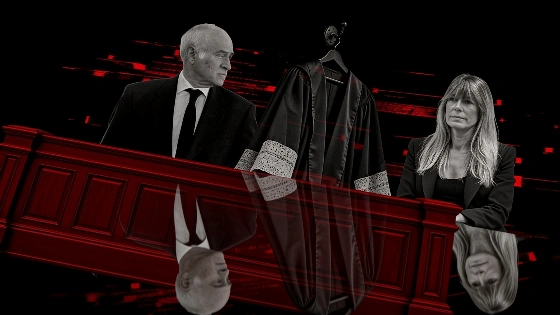
Juan Carlos Peinado has reached the mandatory retirement age of 72. His final act as a judge was to send Begoña Gómez, wife of Prime Minister Pedro Sánchez, to face a jury for alleged influence peddling and embezzlement. No spouse of a Spanish prime minister has faced a jury before. Known as 'caso Begoña', the case has kept the judiciary in the spotlight for 894 days.
Peinado ordered Gómez and her top Moncloa adviser, Cristina Álvarez, to stand before a popular jury. Official records from the BOE confirm his retirement was compulsory, and his career will formally end on September 27, 2026. Independent media have reported the same details.
Political pressure came quickly. The Moncloa pushed back from the start, after Manos Limpias filed its complaint in April 2024. Peinado soon found himself at the center of a political storm. He went to the presidential palace to question Sánchez and Justice Minister Félix Bolaños, and sought to widen the investigation. The Supreme Court blocked his attempt to add Bolaños, citing legal protections for the executive. Several independent outlets reported that the Madrid appellate court had already approved a jury trial, upholding Peinado’s move as legitimate.
Controversy followed Peinado. During Bolaños’s testimony, the judge refused to begin until a platform was set up to raise his seat above the minister’s. The detail made headlines. The Council of the Judiciary (CGPJ) reviewed complaints about Peinado’s conduct and found no grounds for sanctions, despite the tense atmosphere. RTVE reported that Bolaños filed a new appeal with the CGPJ after earlier complaints were shelved. The Council denied him access to the full case file.
Matters escalated in July 2024. Sánchez, through the State Attorney’s Office, filed a criminal complaint accusing Peinado of “prevarication” for summoning him as a witness. The Madrid High Court dismissed it. Government officials and PSOE leaders kept up their attacks. National Court judge Santiago Pedraz ruled that undermining Peinado was a basic goal for those seeking to neutralize judicial threats to the party.
Peinado made mistakes. He briefly took Gómez’s passport, but the Madrid Provincial Court quickly overturned that decision. He also suggested the National Police might have helped Gómez flee Spain, angering police unions. Still, the Madrid court backed his basic decision: Gómez and Álvarez will face a jury on the most serious charges.
Before 'caso Begoña', Peinado was little known outside legal circles. He once investigated football star Raúl González Blanco for alleged asset concealment; the case ended without a conviction. He also handled Manos Limpias complaints against Madrid city councillors over offensive tweets. Those cases went to the National Court. In 2019, he investigated journalists over alleged leaks in the CDR case, later shelved.
Peinado began his judicial career late and served for about thirty years, using every legal extension. His retirement, effective September 27, 2026, ends a career shaped by high-profile investigations and political battles.
The decision to put Begoña Gómez and her adviser on trial sets a new precedent. The CGPJ’s unanimous support for Peinado signals the judiciary’s determination to defend its independence under heavy political pressure. The coming trial will test Spain’s legal and political order.