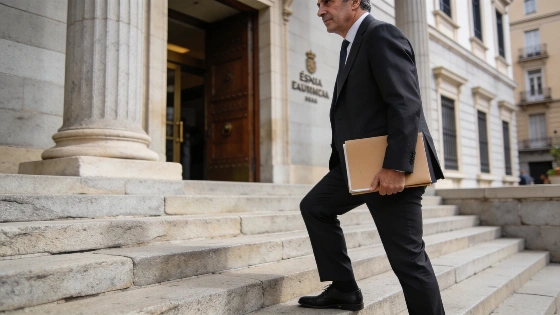
The National Court has refused to impose travel restrictions on José Luis Rodríguez Zapatero. The judge cites ongoing suspicions and highlights the seizure of valuable jewelry. The investigation remains at an early stage.
The National Court has decided not to restrict the movements of José Luis Rodríguez Zapatero, despite ongoing suspicions of criminal activity linked to the Plus Ultra case. Judge José Luis Calama rejected requests from the Anti-Corruption Prosecutor and the Partido Popular to confiscate Zapatero's passport, ban him from leaving Spain, or require biweekly court appearances. The judge emphasized that Zapatero's public profile and strong ties to Spain make any risk of flight unlikely.
However, the court made clear that Zapatero's testimony did not dispel the rational indications of criminality under investigation. According to the judge, the case file contains multiple sources of evidence, including the traceability of bank transfers involving Zapatero and funds originating from public aid granted to Plus Ultra. The investigation also points to the use of several companies suspected of being instrumental in channeling these payments.
One of the key elements in the case is the seizure of jewelry valued at €1.3 million from Zapatero, with authorities noting that neither the origin of these items nor their tax and customs status has been clarified. The judge also referenced evidence obtained from the mobile phone of Rodolfo Reyes, the former owner of Plus Ultra, which was sent to Spain by U.S. authorities.
Despite these findings, Judge Calama ruled that the existence of indications alone does not justify exceptional measures such as restricting Zapatero's freedom of movement. He noted that the relevant evidence has already been secured and that Zapatero's high public profile would make it difficult for him to evade justice. The judge also dismissed concerns about the possible destruction or concealment of evidence, stating that the investigation does not depend on actions Zapatero could take at this stage.
Instead of imposing travel restrictions, the court has requested that Zapatero provide a phone number and email address to ensure he can be contacted immediately if necessary. The judge stressed that imposing further restrictions would be disproportionate and could be seen as a premature penalty, which is not compatible with legal principles.
The investigation remains in its early stages, and the judge acknowledged that further inquiries could either reinforce or dispel the current suspicions. The Plus Ultra case has drawn significant attention due to the involvement of public funds and high-profile figures. In Spain, judicial investigations of former prime ministers are rare and often subject to intense public and political scrutiny. The outcome of this case could have implications for oversight of public aid and the accountability of senior officials.