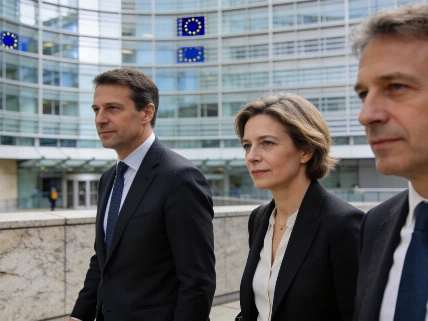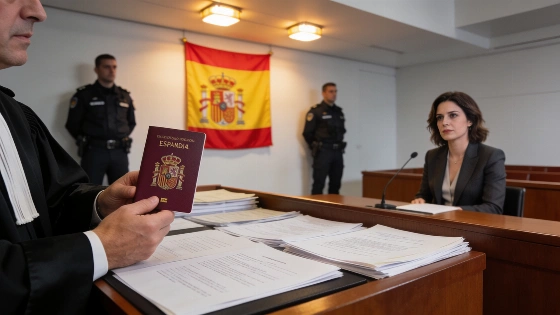
Judge Juan Carlos Peinado upholds the travel ban on Begoña Gómez, referencing past escapes by European leaders. The decision intensifies scrutiny of police escorts and judicial oversight in high-profile cases.
Judge Juan Carlos Peinado has reaffirmed his decision to confiscate the passport of Begoña Gómez, wife of Prime Minister Pedro Sánchez, and to bar her from leaving Spain. The move comes amid ongoing legal proceedings and has sparked debate over the necessity and justification for such restrictions on a high-profile figure under constant police protection.
In a written response to the Provincial Court of Madrid, Peinado addressed the defense's argument that Gómez is always accompanied by police officers responsible for the prime minister's security. The judge countered by referencing a historical case involving a former Italian prime minister who, despite being under police escort, managed to flee to Tunisia during a corruption investigation. Peinado argued that the presence of security personnel does not eliminate the risk of flight, noting that "it would not be the first time a president of a European Union member state has escaped" under similar circumstances.
The judge also clarified his earlier remarks regarding the potential for police escorts to assist in an escape, a statement that had caused significant unrest within the National Police and prompted criticism from police unions. Peinado emphasized that his comments were not intended to insult or undermine the integrity of the police force. Instead, he pointed out that individual officers may fail in their duties, which is why the Internal Affairs Unit exists within the police structure.
The legal team representing Gómez, led by former Socialist minister Antonio Camacho, had filed a complaint challenging the travel restrictions. Peinado's latest statement, signed on June 30 before his vacation, was submitted as part of the court's review of that complaint. The controversy has also led the General Council of the Judiciary (CGPJ) to consider disciplinary proceedings against the judge, reflecting the broader institutional tensions surrounding the case.
This situation echoes other recent high-profile investigations involving Spanish officials and their associates. For example, scrutiny over the conduct of public figures and the role of law enforcement has been a recurring theme, as seen when Prime Minister Pedro Sánchez stood by the director of the Guardia Civil during an internal probe, a development detailed in coverage of the Guardia Civil leadership investigation.
Spain's legal system allows judges to impose precautionary measures, such as passport withdrawal and travel bans, when there is a perceived risk of flight or interference with judicial proceedings. These measures are not uncommon in cases involving public figures, but they often generate public debate about proportionality and the balance between individual rights and the interests of justice. The ongoing review by the Madrid court will determine whether the restrictions on Gómez remain in place or are lifted, a decision that could set a precedent for future cases involving individuals with state security details.