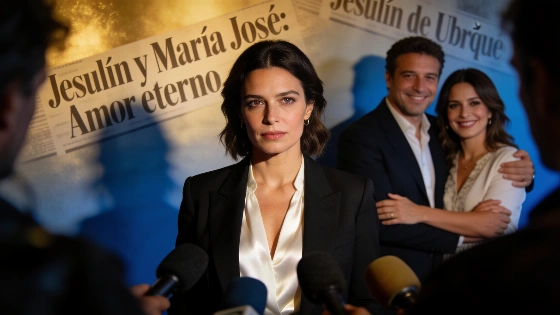
Julia Janeiro, daughter of Jesulín de Ubrique and María José Campanario, has publicly defended her parents amid renewed criticism from Belén Esteban, challenging the long-running narrative around the family. The dispute, rooted in more than two decades of media attention, has returned to the spotlight through televised interviews and statements from members of both families. Julia’s intervention was an unusual public show of support for her parents and her aunt, Beatriz Trapote.
Reports of the exchange say Julia stated that her father would file “a huge lawsuit, and rightly so,” and challenged Esteban to substantiate her claims in court. Journalist Ángela Portero said Julia was initially reluctant to join the programme by phone, but agreed after Portero asked whether she wanted to say something to her aunt. It was a televised show of family support, not a formal legal statement.
The dispute centres in part on competing accounts of Jesulín’s relationship with his elder daughter, Andrea Janeiro, and whether Esteban contributed to the distance between them. Esteban has rejected the suggestion that she was responsible, saying Andrea makes her own decisions and describing Jesulín as the “invisible man.” Trapote has offered a sharply different account, alleging that Esteban sometimes stopped Jesulín from taking Andrea with him. These are conflicting public claims. Andrea herself has chosen to remain outside the spotlight.
That choice has become a boundary in the debate. On the Telecinco programme ¡De Viernes!, an intervention stressed that Andrea is an anonymous person who should not be drawn into the argument. Esteban has also said her daughter chose to keep her life private and called for that decision to be respected. Julia declined to discuss Andrea, keeping her comments focused on her own family’s position.
Julia has also spoken warmly about her parents’ marriage, describing their relationship as exceptionally strong and saying she admires their bond. Jesulín and Campanario said in a joint communication that they would assess Esteban’s statements and protect their rights to honour, privacy and their own image. On 23 October 2026, HOLA reported that Esteban had not confirmed receiving a lawsuit. The legal response described in the coverage remained prospective: a warning and possible action, not a confirmed court filing or judgment.
Esteban has separately warned that she could send a “love letter” to people who continued discussing her daughter. The exchange reflects a broader tension between public figures speaking about their own experiences and disclosures about someone who has deliberately avoided publicity.
Public scrutiny of high-profile families remains intense in Spain. Media narratives about celebrity households often lead to disputes over privacy and truthfulness. In a related context, the Spanish Supreme Court recently addressed the boundaries of public commentary and personal reputation when it acquitted a Madrid resident over satirical tweets about a tragic incident in Málaga. The case highlighted the ongoing tension between free expression and personal dignity (see details on the Supreme Court's decision).
Spain’s fascination with the private lives of public figures has deep roots, with television and tabloid coverage shaping perceptions for generations. The Janeiro family has long been a subject of speculation and debate. Julia’s intervention does not settle the competing accounts, but makes clear that she stands by her parents while declining to expose details of Andrea’s private life.