Spain’s Supreme Court has acquitted a man convicted for mocking tweets about Julen, the child who died in a Málaga well. The ruling highlights the limits of criminal law in cases of offensive speech.
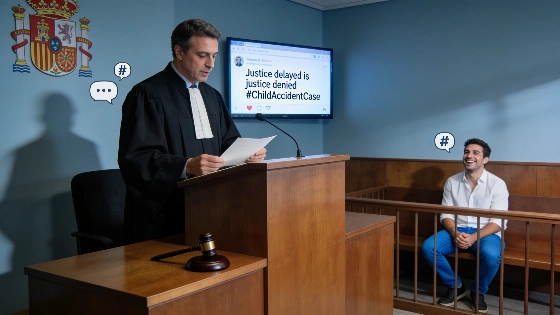
The Supreme Court has annulled the conviction of a Madrid resident who faced prison for a series of satirical tweets about the death of Julen, the two-year-old boy who fell into a well in Totalán, Málaga, in 2019. The court ruled that, despite the insensitivity of the posts, they fall within the boundaries of freedom of expression and do not constitute a criminal offense against moral integrity.
The case centered on more than a dozen tweets published during and after the high-profile rescue operation, which was broadcast live by Spanish media. Among the messages were pointed jokes referencing the fall, the rescue, and the eventual discovery of Julen’s body, including remarks such as “Cómo has podido caer tan bajo xxx,” “el pozo lo ha hecho un hombre no? Pues VIOLENCIA MACHISTA,” and “embutidos El Pozo patrocina este rescate.” The child’s parents brought the matter to court, leading to an initial sentence of 18 months in prison and €6,000 in compensation, later upheld by the Madrid Provincial Court.
However, the Supreme Court has now reversed those decisions. The judges concluded that the tweets, while lacking sensitivity toward the family’s suffering, were not aimed at harming Julen or his parents directly. Instead, the author argued—and the court accepted—that the posts were intended as satirical commentary on the media’s coverage of the tragedy, not as personal attacks. The ruling emphasized that, for a criminal conviction under moral integrity statutes, there must be a deliberate and grave intent to harm a specific individual’s dignity, which was not established in this case.
The court’s decision drew on precedents from both the Constitutional Court and the European Court of Human Rights, highlighting the need to consider context, the nature of the language, and the intended target of the expression. The judges noted that the author did not know the family and did not intend to cause them distress, focusing instead on critiquing the media spectacle. The ruling also referenced a previous case involving the so-called “Tour de la Manada,” where the Constitutional Court stressed the importance of evaluating such matters through the lens of free expression and creative freedom.
While the Supreme Court found no grounds for criminal liability, it did point out that civil proceedings remain possible. The family could still seek damages for violation of their right to honor and image, potentially resulting in financial compensation. The judges expressed solidarity with Julen’s parents, acknowledging the pain caused by the tweets, but maintained that criminal law should not be used to punish speech that, however offensive, does not meet the threshold for a crime.
This decision comes amid ongoing debates in Spain about the boundaries of free speech and the role of the courts in regulating offensive or controversial content online. Similar legal questions have arisen in other high-profile cases, such as the prosecution of individuals for attacks on political party headquarters, as seen in the Santander court’s recent move to prosecute suspects in the PSOE headquarters incident. The Supreme Court’s ruling in the Julen case underscores the complexity of balancing freedom of expression with the protection of personal dignity, especially in the digital age.
Spain’s legal framework distinguishes between criminal and civil remedies for offensive speech. While criminal convictions require proof of intent to cause serious harm, civil law allows for claims based on damage to reputation or emotional distress. The Julen case highlights the challenges courts face in applying these standards to social media, where messages can spread rapidly and reach wide audiences. The ruling may influence future cases involving online speech, setting a precedent for how Spanish courts interpret the limits of satire and criticism in the context of public tragedies.