La bola negra opens in Spain on 25 September 2026, with limited 35 mm screenings. Only five Spanish cinemas are expected to show the format as the film begins its Oscar 2027 campaign.
La bola negra will represent Spain at the 2027 Oscars. At home, it faces a practical problem: most Spanish cinemas cannot project the format in which it was filmed. Javier Ambrossi and Javier Calvo's new film opens exclusively in cinemas on Friday 25 September 2026. Elastica Films is distributing it in Spain. Viewers who want to see it on 35 mm will have to find one of a small number of special screenings.
The confirmed locations are Madrid, Zaragoza and Valencia. Cinesa Príncipe Pío and mk2 Cine Paz are listed in Madrid. Cine Abc Park is named for Valencia, and Cines Cervantes for Zaragoza. The announcement refers to five cinemas nationwide, although the available list identifies four venues. Some reports also mention extra screenings in Madrid. More could be added, but the national 35 mm network remains small.
В Сарагосе сеанс заявлен на 19:00, после чего должен пройти стриминговый коллоквиум с Хавьером Кальво и Хавьером Амбросси.
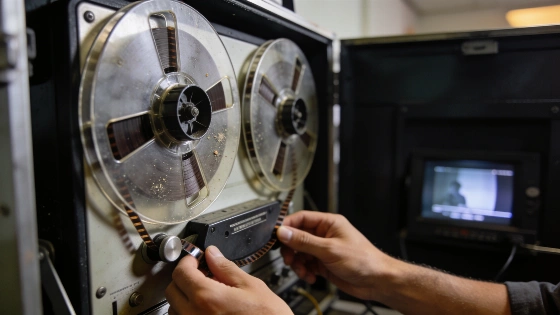
This is more than a technical detail. A film made on 35 mm cannot automatically be shown on the digital projection systems used by most cinemas. The format therefore limits access. For audiences outside the three confirmed cities, the standard cinema release may be the only practical option. The trade publication Camera and Light has also pointed to the gap between the film's production format and the equipment found in ordinary cinemas.
That choice of format feeds into a wider argument about how films reach the public. It has also become part of the release itself. Some audiences will choose between a 35 mm screening and the more widely available digital version.
Christopher Nolan's latest film La odisea was shot on 75 mm IMAX. Even most IMAX theatres were not equipped to project it as the director intended. La bola negra faces a smaller version of the same problem. The format used to make a film does not always match the equipment in cinemas.
Фильм получил People’s Choice Award на TIFF, что усилило его международный наградной профиль ещё до испанского проката. Об этом сообщили Associated Press и CBC.
The film has also built up festival attention. It was presented at the San Sebastián Film Festival in the Perlas section. It is described as a Movistar Plus original from Suma Content Films, produced with other companies. That festival run gives the Spanish release a profile that goes beyond the question of projection equipment.
La bola negra is not a biopic of Federico García Lorca. The story grows out of an unfinished work by the poet and moves through three time periods. Lorca becomes a narrative channel as the film follows the lives and difficulties of three gay men. The connection with Lorca is literary and dramatic, rather than a standard account of his life.
Penélope Cruz, Glenn Close, Miguel Bernardeau, Lola Dueñas and Carlos González lead the cast. Los Javis have received ovations at festivals where the film was shown. Now it has to connect with cinema audiences during its Spanish release. Carlos Boyero of EL PAÍS has praised the filmmakers' ability to portray feelings and create a distinctive atmosphere.
The Oscar selection gives the release an international stake. Independent reports confirm that La bola negra was chosen to represent Spain in the race for the 2027 Academy Award for Best International Feature Film. The awards campaign is developing alongside a domestic release where access to the intended format is unusually concentrated.
As earlier coverage shows in a different cultural field, attention often gathers around the headline event. Here, the decisive detail is the screen itself. The film's reception at San Sebastián and its People’s Choice Award at TIFF have raised expectations. The first practical encounter with audiences will begin in Spanish cinemas on 25 September 2026.
La bola negra arrives with major recognition and a traditional format, but access to that format is concentrated in a handful of venues. The five-screen figure is more than a curiosity. It is the central condition of the Spanish release. The Oscar campaign may expand the film's profile, but its 35 mm presentation will remain a specialist experience for viewers in Madrid, Zaragoza and Valencia. La bola negra is an ambitious national cinema event whose artistic identity is being tested by the limited infrastructure available to show it as made.