La Palma's volcano stopped erupting in 2021, but families are still waiting for permanent homes. Volcanic gases keep parts of the island restricted, and many residents continue to live with the mental health effects of the disaster.
Five years after the Tajogaite volcano stopped erupting, La Palma is still waiting for the disaster to end in practical terms. Families remain in prefabricated homes. Puerto Naos and La Bombilla have not returned to normal because volcanic gases still restrict habitation. The emergency ended on 13 December 2021, but its effects continue to shape housing, health and daily life on the island.
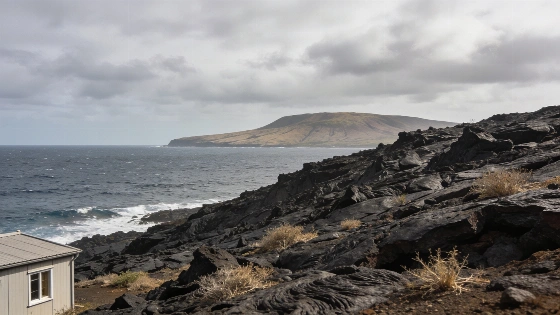
The eruption began on 19 September 2021 and lasted 85 days. Lava buried almost 3,000 buildings, destroyed crops, erased entire neighbourhoods and forced around 7,000 people to evacuate. It also changed La Palma's landscape by extending the island into the sea.
The eruption left a lava field covering 1,219 hectares. The final damage assessments also record 2,988 destroyed structures and 1,345 homes lost.
The physical destruction is only part of the story. Homes, roads, banana plantations and personal memories disappeared beneath the lava flows. Economic growth alone cannot repair that loss.
La Palma's economy has exceeded its pre-2021 growth levels. Thousands of people still live with the consequences. Public investment, including support from the Government of Spain, has not produced a permanent housing solution for every displaced family. Five years on, temporary accommodation remains a clear sign that rebuilding has moved more slowly than the news cycle. Reports published for the anniversary put overall reconstruction progress at about 60%. Housing and infrastructure are still incomplete in some areas.
The hardest uncertainty remains in places where people still cannot return. Puerto Naos and La Bombilla were evacuated and remain partly restricted because of volcanic gases. Firefighters and other officials continue to test the air. Residents are still waiting to recover their homes and the routines that came with them.
The human cost is less visible, but it is no less real. A scientific study by the Research Unit of Hospital Universitario Nuestra Señora de La Candelaria examined the mental health of La Palma's adult population after the eruption. In the months that followed, almost half of those assessed showed post-traumatic stress. Anxiety and insomnia were also reported.
The next task is to find out which effects have lasted through the five years since the eruption. Economic indicators cannot tell the whole story while residents are still dealing with displacement, fear and the psychological effects of losing their homes.
During the 85 days of the eruption, coverage was exceptional. Millions of people followed reports from an island where municipalities, streets, schools, businesses and roads vanished under lava and ash. Public and private media recorded historic audiences. Then the cameras disappeared, just as families who had lost everything began the much harder work of starting again.
The pattern is familiar in other housing crises. Once immediate attention fades, people left without a stable home must keep dealing with the consequences away from the headlines, as shown by Madrid's housing crisis. On La Palma, the problem is sharper because the missing homes are tied directly to a landscape that remains dangerous in parts.
According to anniversary coverage by RTVE, dozens of families were still living in temporary modular or prefabricated housing five years after the eruption. Some cases had remained unresolved for particularly long periods. Canary Islands President Fernando Clavijo said the regional government remained committed to La Palma and to achieving the island's "full recovery". The housing backlog shows the gap between that goal and residents' daily reality.
Economic activity has improved, including tourism and other sectors. That recovery has not removed the restrictions around Puerto Naos. In September 2026, new rules also took effect for self-employed workers whose activity was affected by the eruption. Post-crisis support is still continuing years after the lava stopped. Official anniversary events and civil-protection courses showed that Tajogaite's effects remain on the public and political agenda.
The central fact five years later is simple: the volcano is inactive, but recovery is not finished. The Tajogaite eruption destroyed buildings and livelihoods in 85 days. Rebuilding a sense of certainty has taken far longer. La Palma's residents still need sustained housing support and mental health care, along with public accountability. An emergency does not end when the cameras leave or the crater falls silent.