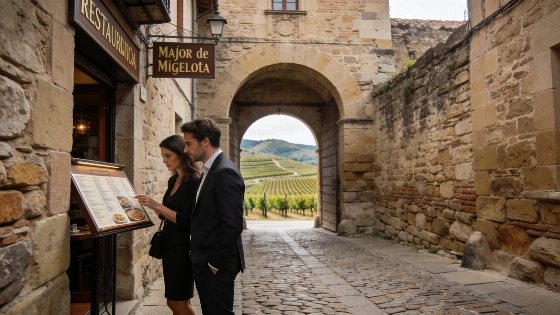
Laguardia in Álava is redefining rural tourism with its preserved medieval walls, underground wine cellars, and a restaurant offering steaks by cattle breed. The town’s unique blend of history and gastronomy has earned it a place among Spain’s most beautiful villages and a new spotlight in the 2026 Guía Repsol.
In Laguardia, steak pricing is direct and deliberate. As of September 2026, Mayor de Migueloa lists Frisona beef at €95 per kilo, with other breeds priced according to the market. This isn’t a marketing ploy—it’s a way for the restaurant to stand out in Spain’s crowded food scene. By naming the breed for each chuletón, rather than grouping them together, the restaurant signals a commitment to transparency and local sourcing. This approach helped earn Mayor de Migueloa a spot in the 2026 Guía Repsol and has made Laguardia a destination for travelers who take food seriously.
Laguardia’s story goes beyond restaurant menus. The town’s medieval center, still ringed by stone walls and entered through five original gates—Páganos, Mercadal, San Juan, Santa Engracia, and Carnicerías—offers a look at the defensive architecture of the old Kingdom of Navarra. Laguardia was founded in the 10th century, its hilltop layout built for survival. Today, its narrow streets and fortified churches, including San Juan Bautista and Santa María de los Reyes, attract visitors looking for authenticity. The polychrome Gothic portico at Santa María de los Reyes, with colors preserved since the 17th century, is a rare example of layered local history.
Mayor de Migueloa maintains its own wine barrel cellar, reinforcing the connection between local cuisine and the Rioja Alavesa wine heritage.
Beneath the streets, Laguardia’s heritage continues. More than 300 calados—underground cellars and tunnels—run below the pedestrian lanes, many still connected to working wineries. These spaces once stored family wine and served as shelters. Now, they are central to the town’s wine tourism, with guided tastings starting at €25 and full menus with steak reaching €135. The experience isn’t limited to one place; the Rioja Alavesa region, with 18 towns and over 13,000 hectares of vineyards, is mapped by these cellars and the tempranillo grape that thrives in its soils.
Laguardia is easy to reach—just 50 kilometers from Vitoria—making it a practical day trip. A typical visit might start at the old gates, wind through stone alleys to Santa María de los Reyes, and finish in a calado for wine or a meal of wood-fired meat. The town’s pace is set by its history. Restaurant hours run from 13:00 to 21:00 between April and October, offering flexibility, but reservations are recommended, especially on weekends.
According to recent reports, Laguardia is being promoted not only as a historical site but also as a gastronomic destination with a strong emphasis on meat provenance, local cuisine, and wine tourism. The town’s tourism infrastructure highlights its fortified access through historic gates, and guided programs now range from €25 to €135, including tastings and steak menus.
Laguardia stands out for how it balances tradition and change. Mayor de Migueloa’s choice to publish breed-specific steak prices is a calculated move—one that might put off some diners but appeals to those who care about where their food comes from. This kind of specialization and openness is working for other Spanish businesses too, as seen in the retail sector.
While Laguardia has been listed among Los Pueblos Más Bonitos de España for a decade, its real strength is that it hasn’t turned into a museum. The living link between its medieval buildings, underground wine culture, and evolving food scene offers a model for rural towns looking to stay relevant in 2026. Rather than chasing mass tourism, Laguardia has sharpened its focus, offering clear value and a sense of place that’s hard to copy. It’s not nostalgia—it’s a practical path to lasting prestige in a crowded market.