Virginia Acuña Ferreira's closing lecture will examine how women in their twenties construct normative and transgressive femininities in conversations with friends. Her talk is one of two plenaries at the first international symposium on grammatical gender, scheduled at the Universidad de León for 26 and 27 November.
Researchers from more than ten universities are expected to take part. The departamento de Filología Hispánica y Clásica organises the meeting; Esther Álvarez García and Sandra Lorenzana Jabares direct it. According to the Universidad de León's announcement, the event aims to bring together researchers approaching gender from different areas of linguistics.
The sessions span sociolinguistics and psycholinguistics. They also draw on discourse analysis, with corpus linguistics included in the programme. The sessions will consider strategies used in inclusive language and gender bias in dictionaries. They will also examine stereotypes attached to professions traditionally described as “masculinised” or “feminised”. Research on gender in language has also examined interaction: a 1979 study, “Against Our Will: Male Interruptions of Females in Cross-Sex Conversation,” addressed interruptions in mixed-gender conversation and drew partly on the dissertation Communicating Gender: A Study of Dominance and Control in Conversation.
The programme's two plenaries give the discussion distinct angles. Elena de Miguel Aparicio, a lexicology and semantics specialist at the Universidad Autónoma de Madrid, will open with ‘Desafíos y paradojas del lenguaje inclusivo: cambios en el mundo, la norma y la lengua’. Acuña Ferreira, from Instituto de Investigación Lingua y Universidade de Vigo, will close with ‘Construyendo feminidades normativas y transgresoras entre jóvenes veinteañeras: prácticas discursivas y dinámicas de género en la conversación entre amigas’.
The event treats gender as a linguistic and social phenomenon, raising questions about how speakers adapt as social ideas change. The topic also intersects with recruitment policy: Spain’s Council of Ministers approved a royal decree-law on 17 November 2026, and reports described measures addressing gender-neutral wording in job advertisements and occupational titles. Examples included replacing “se busca camarera” with “personal de sala”. Reports also described provisions requiring initial remuneration information in vacancies and barring employers from asking candidates about previous salary. Separately, RUSSPAIN reported on a branch fall that injured nine women during Barcelona's Cursa de les Dones in its coverage of race safety.
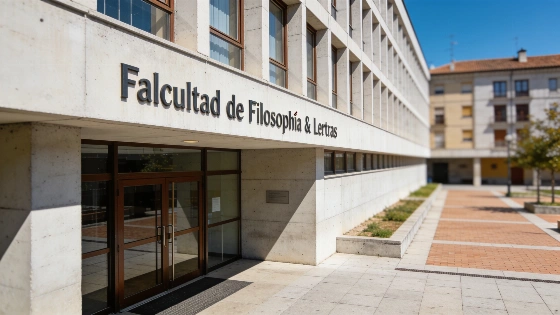
Sessions will take place at the Facultad de Filosofía y Letras. The symposium's official website has the full programme.