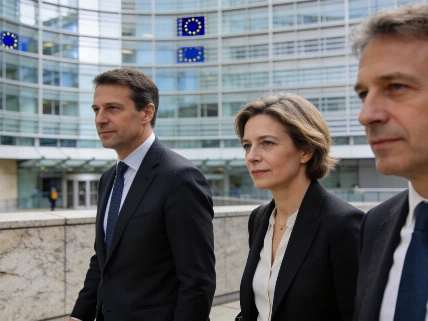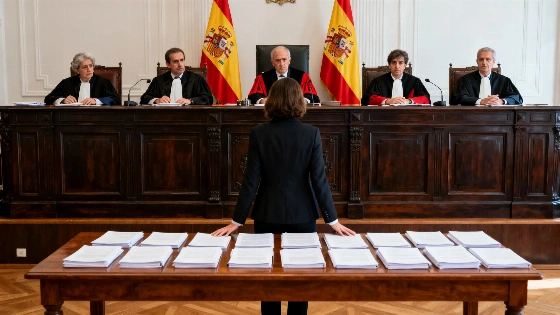
The fate of Begoña Gómez now depends on the Madrid Provincial Court. Pending appeals could overturn the decision to open a jury trial. The case has triggered legal and political tension at the highest level.
The legal future of Begoña Gómez, wife of Spain’s Prime Minister, is now in the hands of the Audiencia Provincial de Madrid. Judge Juan Carlos Peinado has ordered a jury trial against Gómez, but the process faces a critical pause as the higher court reviews a series of appeals that could effectively halt the proceedings. This legal uncertainty comes after Peinado imposed strict measures on Gómez, including the withdrawal of her passport, a ban on leaving Spain, and mandatory bi-monthly court appearances.
Gómez’s defense team, led by former minister Antonio Camacho, had previously urged the judge to wait for the Audiencia Provincial de Madrid to rule on the outstanding appeals before moving forward. Such caution is not unusual in high-profile cases, as seen in previous political trials. However, Peinado proceeded, disregarding the defense’s warnings about the potential waste of judicial resources and the impact on all parties if the appeals are later upheld.
The appeals before the Audiencia Provincial challenge several of Peinado’s decisions, including the indictment of Gómez and the choice to hold a jury trial. Not only the defense but also the Fiscalía have raised objections, accusing the judge of overstepping and repeatedly calling for the case to be dismissed. The investigation has also implicated businessman Juan Carlos Barrabés and Cristina Álvarez, an advisor at La Moncloa.
Earlier in 2026, the Audiencia Provincial already annulled Peinado’s initial attempt to move the case to a jury trial, citing a lack of legal justification. Despite this, Peinado renewed his decision in March, which is now under further appeal. Since the case began in April 2024, the higher court has allowed Peinado to continue with the main investigation but has blocked several of his attempts to broaden the probe, including inquiries into the Air Europa bailout and Gómez’s professional ties to the Instituto de Empresa (IE). The court has also overturned indictments against several figures, such as the rector of the Universidad Complutense de Madrid and a former regional minister.
Additionally, the Audiencia Provincial has stopped Peinado from opening a second trial against Gómez for alleged embezzlement and invalidated a search of Barrabés’s properties, ruling that the judge had violated fundamental rights and acted without sufficient urgency. The court reminded Peinado that the pursuit of truth must respect legal boundaries.
Spain’s legal system allows for significant oversight of investigative judges by higher courts, especially in politically sensitive cases. Jury trials in Spain are rare and typically reserved for specific crimes, making the decision to use this format particularly notable. The outcome of the pending appeals will determine whether the case against Begoña Gómez proceeds or is sent back for further review, with potential implications for the government and public trust in the judiciary.