Madrid remains Spain's leading region for healthcare privatisation. Asturias is catching up fastest, alongside Extremadura and Castilla-La Mancha, while private cover and out-of-pocket costs widen differences in access.
Madrid has the strongest hold on private healthcare, with the maximum score of 34 points in the federation's 12th report. Catalonia and the Balearic Islands score 28 each, while the Canary Islands score 26. Across Spain, private healthcare spending is estimated at around 34 billion euros in 2025, or 2.5% of GDP and about 27% of all healthcare spending, information from figures from the Federation of Associations for the Defence of Public Health.
The total covers insurance payments, regional contracts and direct household spending. The shift reaches every autonomous community and is no longer a small part of the system.
Madrid also directs 16% of its total healthcare spending to agreements with private providers, twice the average recorded across the other regions.
La Rioja has the lowest score at 14 points, followed by Murcia with 15.5, Extremadura with 17.5 and Castilla y León with 18.5. A low score today does not always mean slow growth.
Extremadura is a case in point. Its privatisation indicator has risen by 94.4% since 2014, even though the region still has one of the lowest overall scores. It started from a relatively small base.
Asturias has posted the fastest rise, up 95.8% since 2014. Castilla-La Mancha follows, with a 90% increase. The report says the process accelerated in Asturias during the past three years and in Extremadura since 2022.
Andalusia follows a different pattern. Its overall level of privatisation has grown by 70% over 12 years, but its position fell in the latest report. EFE links that change partly to an adjustment in budget allocations. The region has not abandoned private participation.
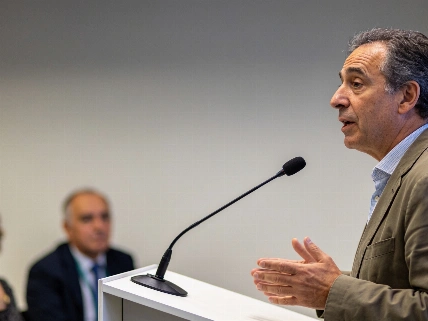
Sergio Fernández of the federation said a higher ranking does not mean a region has a satisfactory model. Private involvement exists across all regional health services, but its intensity and methods differ.
The index goes beyond direct contracts for medical services. It also covers administrative concessions to manage public institutions, including the Hospital de Torrejón model in Madrid and the Alzira model in the Valencian Community.
It counts state money sent to private insurers for civil servants covered through MUFACE, MUJEJU and ISFAS who do not choose the SNS. Direct private purchases through insurance and household out-of-pocket spending are also included.
FADSP's index has a maximum of 34 points. It combines private insurance coverage, public agreements with private providers, private hospital resources and their use, as well as household spending. The score does not directly calculate the share of public money transferred to commercial companies.
Catalonia requires an added qualification. FADSP says many of its agreements are with organisations that do not seek profit. The same index score, then, does not always reflect the same structure or commercial motive in each region.
Household costs are also rising. Average out-of-pocket spending increased by 52.8% to about 576 euros. In 2025, Galicia recorded the highest figure at 658.85 euros per person. Madrid followed at 652.68 euros and the Basque Country at 651.69 euros.
Andalusia recorded the lowest figure. The gap between Galicia and Andalusia reached 167.17 euros.
La Vanguardia, reporting on the FADSP study, says private healthcare spending includes regional contracts, insurance payments and direct household costs. The number of people with private insurance has grown by 81% since 2014. It now covers about 21% of Spain's population.
Private infrastructure and household spending do not always rise together. In Galicia, private providers control 20% of hospital beds, against a regional average of 26.5%.
Yet private providers hold 25% of Galicia's high-technology medical equipment, one of the highest shares in Spain. That helps explain why the FADSP ranking is a composite measure, not a simple count of private beds or public contracts.
EFE also reports that private participation exists in every regional health system. The mechanisms differ, as does their intensity.
Waiting times shape access. Specialist appointments can take months. People with enough money can seek care elsewhere; those without it remain in the queue.
The federation says limited access becomes an equity problem. Timely care increasingly depends on household resources.
The report also points to wider social differences. People with lower levels of education, residents of depopulated areas and people without support networks face particular exposure to unequal access. Women and people on lower incomes face it too.
The authors say public-private cooperation does not meet the growing needs of an increasingly unequal society. They argue that it can deepen those differences.
The federation wants the defence of public healthcare to prompt the same mobilisation seen around housing and speculation. With general elections called, it is asking each party to state which healthcare model it supports.
Concern about public protections also recalls an earlier rights report. The two subjects concern different institutions and conflicts.
Spain still has one of the world's strongest public healthcare systems, information from the report. The figures show that the system retains its international strength even as access divides more sharply by income and geography.
When public money supports parallel routes to care, privatisation becomes a political choice with measurable effects on equity and the meaning of universal healthcare.
The rise in private insurance and the regional gap in out-of-pocket spending point to greater dependence on income and place of residence for access to additional care. These figures alone do not establish whether private provision is more or less efficient.