Yuli Novak, head of B'Tselem, accuses Israel of pursuing a systematic policy of elimination in Gaza and the West Bank. She warns that international inaction fuels impunity. The NGO faces growing threats as the government hardens its stance.
Yuli Novak, director of the Israeli human rights group B'Tselem, says Israel's actions in Gaza and the West Bank are not isolated events but part of a long-term project to eliminate Palestinians. She argues that the lack of international intervention has created a sense of impunity, allowing what she calls genocide in Gaza to continue.
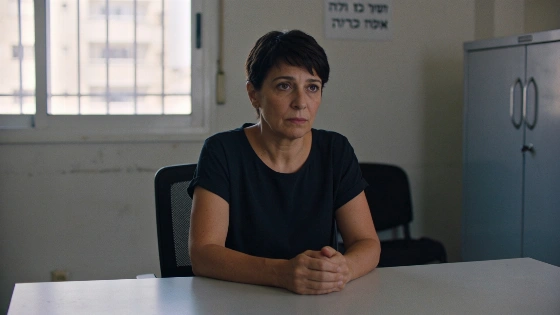
B'Tselem's Tel Aviv office has no signs on the door—a precaution against threats the group faces. Novak, who previously led Shovrim Shtiká and has been the target of government smear campaigns, now heads one of Israel's most scrutinized NGOs. She describes a country where defending human rights can put activists at risk, and where the government is growing more authoritarian.
According to OCHA, from the start of the ceasefire on 10 October 2025 to 11 September 2026, there were 1,358 deaths and 4,541 injuries in Gaza, highlighting ongoing violence despite the truce.
Novak says the problem is bigger than Prime Minister Benjamin Netanyahu. She points to a government dominated by hardline right-wing parties, pushing an ideology that, in her view, has always aimed to erase the Palestinian people. She traces this logic back to 1948, from the Nakba to the current destruction in Gaza.
According to Novak, the events of October 7 gave the government an excuse to speed up its agenda of Jewish supremacy, ethnic cleansing, and colonization. She rejects the idea that violence in the West Bank is just the work of rogue settlers, saying these groups are armed and trained by the state and act without consequences. She notes that public discourse now centers on the idea of total victory—meaning the elimination of the other side as a condition for security.
B'Tselem calls what is happening in Gaza genocide, and describes the West Bank as undergoing a slower but intentional process of elimination. Novak says the Israeli system depends on the participation of hundreds of thousands, especially soldiers, and that society is saturated with incitement and dehumanization of Palestinians. She believes most Israelis are personally and economically invested in this project, making internal change unlikely for now.
B'Tselem's latest report, as cited by independent media, states that from 7 October 2023 to 31 August 2026, Israeli forces killed 1,107 Palestinians in the West Bank, including 245 children. The organization frames these actions as part of a unified political project, with violence, displacement, and economic suffocation accelerating since late 2022 and the outbreak of the Gaza war in October 2023.
Novak draws comparisons to other societies that have committed atrocities, arguing that no nation recognizes its own crimes as they happen. She warns that nearly every Israeli household has a direct connection to the military, reinforcing a collective blindness that keeps the system of apartheid in place.
Novak is concerned that the current government could be re-elected. She describes its members as extremists, some even fascist or sadistic, and sees little hope in the political alternatives, which she says differ only in style, not substance. Even a change in leadership, she argues, would likely mean a more palatable version of apartheid, not a real break from destructive policies.
Internationally, Novak doubts that recent sanctions by the UK, France, and Canada on settlement products will have much effect. She calls them a small step, but not enough. She believes real change will require sustained public pressure, since governments are reluctant to challenge Israel's system directly. She compares this to local efforts in other places, like Barcelona's targeted mental health measures reported earlier, where local action tries to fill the gap left by slow-moving institutions.
Novak's own path—from her background in the Zionist left to her current position—reflects a broader disillusionment with the idea of Jewish supremacy. She acknowledges the personal cost, including lost friendships, but says the fight for equality and human rights is not negotiable. She still believes political change is possible, though history suggests it will only come after long struggle and suffering.
Novak's account is a direct indictment of both Israeli policy and international inaction. The evidence she presents points to a system built for exclusion and domination, maintained by broad participation and reinforced by the world's unwillingness to intervene. As B'Tselem faces the threat of being outlawed, the stakes for civil society in Israel are higher than ever. Novak warns that the world's silence is not just a failure of solidarity—it is part of what allows injustice to continue.