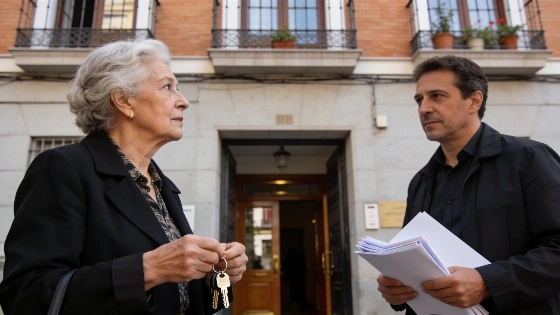
After a high-profile eviction and days of tense negotiations, Ricardo Alonso of Urbagestión has confirmed a preliminary agreement that could allow Maricarmen Abascal, 87, to move back into her Madrid apartment. The new rent would be set at around 30% of her net income, pending final approval.
Maricarmen Abascal could soon be back in her Madrid apartment. Ricardo Alonso, speaking for Urbagestión, confirmed a possible return just days after she was forced out. The breakthrough came after a four-hour meeting at the Empresa Municipal de la Vivienda y Suelo (EMVS). City officials stepped in to mediate. Both sides reached a tentative deal for a new lease.
The plan is simple. Maricarmen, 87, would pay rent set at about 30% of her net income. She has lived in the Alcalde Sainz de Baranda flat since 1956. Alonso did not give an exact number but said the new rent would be close to what she paid before. The deal is not final. Maricarmen still needs to accept, and lawyers are working out the contract details.
According to Maricarmen Abascal's lawyer, Beatriz Duro, the new agreement would secure her tenancy for 8 years at a comparable rent level.
This announcement came after a week of protests and heavy media attention. The eviction happened on September 23, after a long legal fight. Demonstrators set up a protest camp in Puerta del Sol. Maricarmen’s age and her decades in the flat drew public sympathy. The case also sparked debate about housing rights and the power of private landlords in Madrid.
Urbagestión bought the property in 2020. Critics called the company a “fondo buitre”—a vulture fund. Alonso pushed back. He described Urbagestión as a small business with only a few partners and staff. He said the company tried other options before the eviction. According to Alonso, Maricarmen lost her legal claim to the apartment in 2007, even though she kept paying the old rent. The courts agreed with the owner. Her tenancy, which started under her father’s name and survived several legal handovers, ended by court order.
City mediation changed the direction. Urbagestión first wanted to put the apartment in the ReViVa program. The city blocked this because of the property’s mortgage and program rules. The current deal is a step forward, but nothing is final until Maricarmen signs and the paperwork is done.
Reuters and BBC Mundo report that the apartment is located at Alcalde Sainz de Baranda 46, in Madrid's prestigious Retiro district. The eviction was carried out by police on September 23, 2026, after more than seventy years of continuous residence, and sparked large-scale protests and humanitarian appeals.
Alonso also spoke about the backlash. He described threats, business disruptions, and even a box of cockroaches sent to the company. He called it intimidation. Urbagestión has taken legal action against the Sindicato de Inquilinas for publishing personal data and photos of company staff and for using the “fondo buitre” label. The union refuses to back down. It still supports Maricarmen’s return.
When asked about the union’s role, Alonso admitted they were organized and present during the eviction. He would not say if Maricarmen was being used as a symbol. Still, he acknowledged her vulnerability and said a humane solution was needed. The Sindicato de Inquilinas says its only goal is to get Maricarmen back home. The group has openly questioned the landlord’s actions.
Maricarmen’s future is still up in the air. She must sign the new contract before anything changes. But the chance of her return is a big shift from the hard line that led to her eviction. As reported earlier, her story has become a symbol of Madrid’s housing crisis. It shows how legal protections for long-term tenants can fall short and how both landlords and vulnerable renters face mounting pressure.
This case is about more than one eviction. City mediation forced private property interests to face public pressure. Urbagestión’s willingness to negotiate shows that sticking to strict legal rights can backfire in the public eye. Madrid’s housing sector needs flexible, humane answers. Sometimes, the law is not enough.