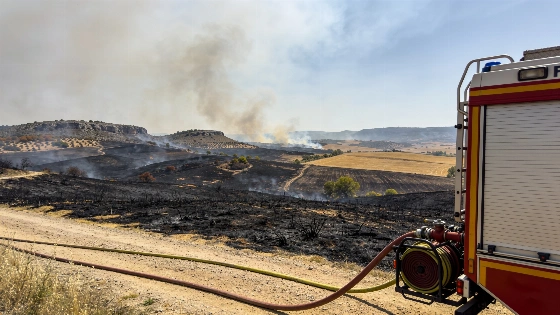
A fast-moving wildfire in Lozoyuela has forced Madrid authorities to confine 2,000 residents and evacuate dozens. Emergency services have closed key roads and deployed extensive resources to contain the fire.
A major wildfire broke out in Lozoyuela on Sunday afternoon, prompting Madrid’s regional government to activate level 2 of its Civil Protection Plan against forest fires. The rapid spread of flames, driven by local terrain conditions, led authorities to confine around 2,000 people in Buitrago de Lozoya and nearby villages, while 70 residents were evacuated from threatened urbanizations and isolated homes.
Madrid’s emergency services responded by deploying 28 ground units and nine aircraft from the regional fire brigade, with support from Forest Agents and the Unidad Militar de Emergencias (UME). The fire, which started around 16:00 in a vegetated area, quickly advanced toward populated zones, forcing urgent action to protect residents and infrastructure.
To ensure safety and facilitate firefighting efforts, traffic was halted on the A-1 motorway at kilometer 69 northbound. Additional closures affected the M-126 at kilometer 0 and the M-135 at kilometer 5, disrupting regional mobility. Residents in affected areas received ES-Alert messages on their mobile phones, instructing them to stay indoors with doors and windows shut, avoid unnecessary travel, and refrain from using private vehicles.
Security operations on the ground included patrols from the Guardia Civil, mobile citizen service offices (OMAC), and the Command’s Security Unit (USECIC), all focused on maintaining order and assisting with evacuations. The Advanced Command Post was established at the Lozoyuela Fire Station to coordinate the response, while a crisis committee convened at the headquarters of the Agencia de Seguridad y Emergencias Madrid 112 (ASEM112) to monitor the evolving situation.
Authorities confirmed the arrest of a suspect believed to have started the fire. According to Francisco Martín, the Government Delegate in Madrid, the individual was apprehended after attempting to flee and being identified by local residents. The suspect reportedly has a history of similar incidents elsewhere in Spain, and materials found in his backpack are now part of the ongoing investigation.
Madrid’s regional president, Isabel Díaz Ayuso, emphasized on social media that emergency teams are working relentlessly to safeguard both the environment and local communities, highlighting the importance of coordination and collective responsibility. Francisco Martín also assured that all necessary state resources are being mobilized and urged residents to exercise maximum caution in the affected areas.
This incident comes amid heightened concern over wildfire risks across Spain, especially during the dry summer months. The scale of the response in Lozoyuela reflects lessons learned from previous major fires, such as the Los Gallardos blaze in Almería, where authorities faced significant challenges in containment and victim identification. For context on how regional governments have managed similar emergencies, see the report on the Los Gallardos fire response in Almería.
Spain’s approach to wildfire management has evolved in recent years, with increased investment in early warning systems, inter-agency coordination, and public communication. The use of ES-Alert and rapid deployment of military units underscore the priority given to protecting lives and property. As the situation in Lozoyuela develops, authorities continue to monitor weather conditions and fire behavior, prepared to adjust measures as needed to ensure public safety.